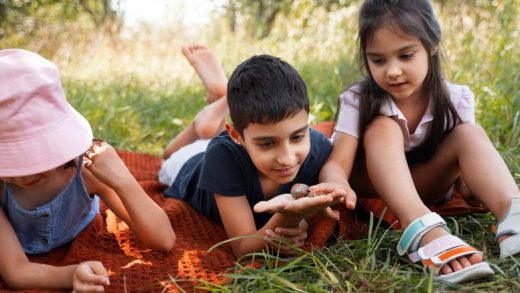
It is incredibly heart-warming to see a child’s face light up when they figure things out for themselves. It could be something tiny, like matching the appropriate puzzle piece or memorizing a pattern, but that single moment reveals a lot about what’s going on in their minds. This is what experts call cognitive play, though most parents just call it “playtime with purpose.”
Cognitive play isn’t about worksheets or long lessons. It’s about brain building moments that happen naturally while playing. Every time a child sorts, builds, guesses, compares, or imagines, their brain makes new connections.
And the best part? You don’t need fancy toys to make it happen. Just everyday things, time, and a bit of curiosity.
What Exactly Is Cognitive Play?
At its core, cognitive play is how children understand the world through exploration and reasoning. It’s when they test ideas — “What happens if I stack this on top?” — or notice patterns like “All red blocks are squares.” It’s how logic, memory, and problem-solving quietly develop long before formal learning begins.
For parents, it’s a relief to know that these cognitive play activities for preschoolers can happen anywhere — while waiting for dinner, during bath time, or on a lazy Sunday afternoon.
You may already be doing a lot more for your child’s brain than you realise.
Brain Development Activities Hiding in Everyday Life
Think of how many mini brain gyms are scattered through your home. Folding clothes becomes a sorting game (“Whose T-shirt is this?”). Matching socks builds memory and pattern recognition. Counting rotis or arranging vegetables in order of size builds sequencing skills — a key part of brain development activities for growing kids.
Parents often feel pressured to buy expensive brain puzzles for kids. But it’s the small, repeated tasks — building blocks, finding differences, remembering clues — that strengthen focus and logic.
One parent shared that her son spent half an hour trying to balance spoons on a cup. What looked like mischief was actually brain activity for kids — testing balance, patience, and cause-and-effect thinking all at once.
Simple Cognitive Activities You Can Try at Home
Here are some easy ways to bring cognitive play activities for preschoolers into your routine without turning the house upside down.
- Treasure Hunt with Clues
- Sorting Station
- Story Chain
- Pattern Parade
- Board Games and Memory Games
Hide toys around the house and give short hints. “Something soft is near your pillow.” This builds memory and reasoning. Over time, make the clues trickier — “I stay near where shoes rest.”
Old buttons, pulses, or coins work beautifully. Ask your child to group by colour, size, or shape. It’s sorting, classifying, and counting — all rolled into one.
Start a story with one line: “A monkey found a hat.” Ask your child to add the next line. This game works wonders for sequencing and imagination. It’s also a clever cognitive play method used in schools.
Use coloured pencils, beads, or leaves. Create simple patterns (red-green-red-green) and ask your child to continue. This strengthens visual logic and helps in later math concepts.
Carrom, Snakes and Ladders, or even Ludo are some of the best brain games for kids. They build patience, strategy, and decision-making. Memory card games train focus — something modern kids need more of.
Why Brain Puzzles for Kids Still Matter
Not all puzzles are created equal. A jigsaw puzzle helps with spatial understanding. A maze sharpens planning skills. A crossword builds vocabulary and logic.
When children work on brain puzzles for kids, they’re quietly strengthening neural pathways that help them later with reading, writing, and problem-solving. It’s not about finishing fast; it’s about learning to stick with a challenge — a quality every parent wishes for their child.
Try keeping one “open-ended” puzzle on the table — something without just one right answer. It could be magnetic tiles or building blocks. Watch how your child’s ideas evolve over days. This kind of brain activity for kids builds patience, creativity, and self-belief.
Games That Calm and Build Focus
Parents often ask, “Does every game have to be loud and active?” Not at all. Some of the best brain games for kids are the quiet ones — ones that ask them to observe, listen, and think before reacting.
A simple example: “Spot the sound.” Play different sounds — a door closing, a spoon falling, a dog barking — and ask what they heard. This sharpens auditory processing and attention.
For preschoolers, even cognitive activities for preschoolers like matching shadows, tracing letters in sand, or copying patterns from memory help in building focus gently.
When Play Becomes Therapy
There’s another side to this. For children who struggle with attention, anxiety, or social understanding, therapists often use cognitive behavioural play therapy. It blends guided play with thinking exercises. A child might use toys to act out feelings or find solutions through storytelling.
It’s a reminder that play isn’t just fun — it’s healing too. While not every home needs formal therapy, the idea behind it helps parents create safe spaces for expression. So, when your child lines up toy cars and tells a story about traffic jams, they’re not just playing — they’re processing their day, feelings, and thoughts.
The Science Behind the Fun
Every brain development activity builds something specific. Sorting develops logic. Memory games strengthen recall. Board games improve impulse control. Pattern recognition sets the base for math.
What seems like simple cognitive play is actually laying the foundation for problem-solving, empathy, and communication. That’s why educators call the early years “the wiring phase.” The more diverse and hands-on the experience, the stronger those brain connections grow.
So the next time your child insists on playing the same matching game again and again, let them. Repetition is how the brain says, “I’m mastering this.”
How Parents Can Keep It Fresh
Many parents worry that kids get bored of doing the same things. A small change can renew interest.
- Change the materials: use bottle caps instead of blocks.
- Add a time challenge.
- Involve siblings or grandparents.
- Turn chores into play (“Can you find three round things in the kitchen?”).
The goal is not perfection. It’s engagement. Children thrive when they feel they’re discovering something new — even in the old.
Cognitive Play Is Not About More, But About Meaning
When parents hear “cognitive development,” it sounds serious. But in reality, it’s woven into laughter, questions, and a bit of mess.
A parent once said, “My daughter learns best when I stop teaching.” That’s the spirit of cognitive play activities for preschoolers — gentle guidance, not instruction.
At the end of the day, the best learning doesn’t look like studying. It looks like curiosity — a child trying, failing, and trying again.
At Kangaroo Kids International Preschool, play is the heartbeat of learning. Teachers use real-world experiences and cognitive activities for preschoolers to spark thinking and confidence. Whether it’s sorting, storytelling, or science experiments, each moment is a small step in lifelong learning.
Because when play is meaningful, learning becomes effortless, and that’s the true joy of childhood.