Across India’s major cities today, many parents are increasingly choosing schools that offer international curricula or globally aligned educational philosophies. One major reason behind this shift is aspiration. Families want their children to eventually study, work, and thrive in global environments. Whether it is higher education opportunities in countries like the United States, Canada, the United Kingdom, Australia, or Singapore, many Indian parents are thinking far beyond immediate academics. They are asking deeper questions about the kind of skills, confidence, communication abilities, and adaptability their children will need in the future.
But an important misunderstanding still exists. A global education is not only about learning English fluently or following an international syllabus. True global readiness begins much earlier and runs much deeper. It starts with emotional confidence, curiosity, communication skills, empathy, adaptability, creativity, and the ability to understand and respect different cultures and perspectives.
This is where the idea of a global mindset becomes important. Modern education experts increasingly believe that children should not simply memorise information about the world. They should learn how to think openly, collaborate with others, appreciate diversity, and adapt comfortably to changing environments.
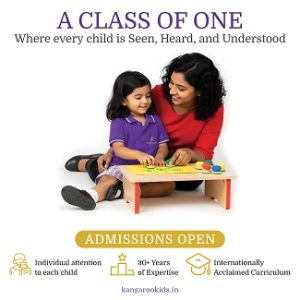
At Kangaroo Kids, this philosophy begins during the earliest years of childhood. Rather than waiting until secondary school or adolescence, the school introduces children to experiences that gradually nurture curiosity, emotional intelligence, communication confidence, creativity, and cultural awareness from the preschool stage itself.
Why Indian Parents Are Thinking Globally Earlier Than Ever
Today’s parents are raising children in a world very different from the one previous generations experienced.
Modern children are growing up with:
- Global digital exposure
- International career possibilities
- Cross-cultural communication
- Rapid technological change
- Diverse social environments
As a result, many parents now recognise that academic excellence alone may not be enough for long-term success.
This growing awareness is increasing interest in schools that support a broader global mindset from early childhood onward.
What Does a Global Mindset Really Include?
Many parents assume the global mindset simply refers to international exposure or fluency in English.
In reality, a global mindset includes:
- Curiosity about different cultures
- Open-minded thinking
- Adaptability
- Emotional intelligence
- Collaboration skills
- Communication confidence
- Respect for diversity
Children with a strong global mindset are often more comfortable navigating unfamiliar situations and interacting with people from different backgrounds.
Why Preschool Years Matter for Developing a Global Mindset
The preschool years are among the most important stages of emotional and cognitive development.
During early childhood, children begin learning:
- Social behaviour
- Communication patterns
- Emotional responses
- Curiosity and exploration
- Perspective-taking
This makes early childhood the ideal time for developing a global mindset naturally and meaningfully.
Children who experience diverse ideas and emotionally supportive environments early often become more adaptable and open-minded later in life.
How Kangaroo Kids Introduces Children to Diversity Early
At Kangaroo Kids, children are exposed to:
- Stories from different cultures
- Collaborative group activities
- Creative exploration
- Language-rich experiences
- Inclusive celebrations
- Play-based social learning
These experiences help children understand that the world includes many different people, traditions, ideas, and perspectives.
This gradual exposure supports a healthy global mindset from the very beginning.
Why Communication Skills Matter in a Global World
One of the most important aspects of modern education is communication.
Children today need to:
- Express ideas confidently
- Listen respectfully
- Collaborate with peers
- Participate in discussions
- Understand emotional cues
Classroom experiences that encourage storytelling, dramatic play, group interaction, and open-ended conversations help children develop these communication skills naturally.
This emotional and social confidence becomes an important part of a child’s global mindset.
How Play-Based Learning Supports Global Thinking
Young children learn best through:
- Exploration
- Imagination
- Conversation
- Social interaction
- Creative play
At Kangaroo Kids, play-based learning environments encourage children to:
- Solve problems collaboratively
- Explore ideas independently
- Participate confidently in group settings
These experiences build flexibility and adaptability, which are essential qualities in a rapidly changing global world.
Why Emotional Intelligence Is Part of a Global Mindset
Children who understand emotions and social interaction often adapt more successfully in multicultural environments.
A strong global mindset includes:
- Empathy
- Respect
- Emotional awareness
- Perspective-taking
This is why modern early childhood education increasingly prioritises:
- Social-emotional learning
- Collaborative activities
- Communication-based classrooms
- Emotionally supportive teaching approaches
How Kangaroo Kids Encourages Curiosity About the World
Curiosity is one of the foundations of lifelong learning.
Children naturally ask questions about:
- People
- Places
- Cultures
- Nature
- Community life
At Kangaroo Kids, teachers encourage children to:
- Explore ideas freely
- Ask questions confidently
- Participate actively in discussions
- Observe and investigate the world around them
This curiosity-driven learning approach supports both creativity and a healthy global mindset.
Why Creativity Matters for Future Readiness
Modern careers increasingly value:
- Innovation
- Creative thinking
- Collaboration
- Problem-solving
- Adaptability
These skills begin developing during early childhood through:
- Art
- Storytelling
- Role play
- Project-based learning
- Open-ended exploration
A child with a strong global mindset is often more willing to think creatively and adapt to unfamiliar situations.
Indian Context: Why Global Exposure Matters Today
India itself is becoming increasingly interconnected with the world economy and global industries.
Children today may eventually:
- Study abroad
- Work in international teams
- Collaborate across cultures
- Communicate in multicultural environments
This reality makes developing a global mindset more important than ever before.
However, global readiness does not require abandoning Indian identity or values. In fact, children who understand and appreciate their own cultural roots often navigate global environments more confidently.
How Multicultural Learning Builds Open-Mindedness
Children exposed to:
- Different festivals
- Diverse stories
- Multiple languages
- Collaborative learning environments
often become more accepting and empathetic.
At Kangaroo Kids, culturally inclusive experiences help children appreciate both their own traditions and those of others.
This balance supports a healthy and emotionally grounded global mindset.
Why Independence and Confidence Matter Globally
Children who are encouraged to:
- Make choices
- Solve problems
- Communicate independently
- Participate actively
often become more adaptable and self-assured later in life.
Modern global environments increasingly reward:
- Confidence
- Initiative
- Flexibility
- Emotional resilience
These qualities begin developing during the earliest years of childhood.
How Teachers Shape a Child’s Global Outlook
Teachers strongly influence how children:
- View differences
- Communicate socially
- Respond to challenges
- Build confidence
Emotionally supportive teachers help children feel safe exploring new ideas and perspectives.
This openness becomes an important foundation for lifelong learning and a broader global mindset.
Common Misunderstandings About Global Education
Global Education Is Not Only About English
Communication skills matter, but emotional intelligence and adaptability matter too.
Global Readiness Does Not Mean Rejecting Indian Values
Children benefit from understanding both local identity and global perspectives.
Preschool Is Not Too Early
Early childhood is actually one of the most important stages for shaping social and emotional attitudes.
Understanding these ideas helps parents appreciate the deeper global mindset in modern education.
Long-Term Benefits of a Global Mindset
Children who develop a strong global mindset early often:
- Adapt more comfortably to change
- Communicate more confidently
- Build stronger empathy
- Collaborate effectively
- Remain curious and open-minded
These qualities become increasingly valuable in modern education and future careers.
Why the Early Years Matter More Than Parents Realise
Many parents focus heavily on:
- Academic performance
- School rankings
- Curriculum structure
While academics remain important, the preschool years are also when children build:
- Confidence
- Curiosity
- Emotional intelligence
- Social flexibility
- Communication habits
These qualities strongly influence future success in global environments.
Last Thoughts
The growing popularity of international schools and globally aligned educational philosophies in Indian cities reflects a deeper shift in parenting priorities. Families are increasingly recognising that future success requires much more than academic achievement alone.
Children today need emotional confidence, adaptability, creativity, communication skills, cultural awareness, and the ability to collaborate across differences. These qualities form the true foundation of a healthy global mindset.
At Kangaroo Kids, this journey begins during the earliest years of childhood through emotionally supportive classrooms, storytelling, collaborative learning, creative exploration, cultural inclusivity, and child-centred experiences that encourage curiosity and confidence.
For families seeking learning environments that nurture communication, creativity, emotional intelligence, imaginative exploration, adaptability, and globally relevant life skills from the earliest years, understanding the educational philosophy and classroom approach at Kangaroo Kids can provide valuable insight into how role play, storytelling, collaborative learning, and play-based experiences are thoughtfully integrated into everyday preschool education to help children build a strong and balanced global mindset from the very beginning.