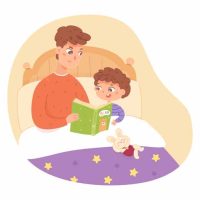
A friend recently told me how her children became completely absorbed whenever a story began. A simple story could build language and imagination. A short English story could become a special moment together. Whether at bedtime or on relaxed evenings, her two kids would beg, “Mom, please tell us a story!”
For many Indian families, stories could introduce folk tales while helping children hear English naturally. You will be surprised by how stories can build vocabulary, sequencing, listening, and values while also creating opportunities for conversation, questions, and shared time.
Her experience reminded me that storytelling does not need elaborate preparation. Even a few minutes with a familiar tale can encourage children to listen carefully, imagine different possibilities, and connect new words with ideas and experiences.
How Can Parents Use Short Stories at Home?
A small story in English works when parents make reading interactive. Pause and ask what might happen next. Let children repeat words, imitate characters, or explain.
Even a few minutes of English story reading can encourage children to listen, predict, and communicate.
30 Short English Stories for Preschoolers
1. The Helpful Little Ant
An ant asks others for help carrying a leaf and learns the value of teamwork.
2. The Red Balloon
A lost balloon lands in a tree, and a neighbour helps retrieve it.
3. The Honest Woodcutter
A woodcutter chooses honesty when someone offers him a tool that isn’t his.
4. The Clever Rabbit
A rabbit uses a reflection in a pond to escape danger.
5. The Little Seed
A child waters a seed until it grows into a plant.
6. The Kind Elephant
An elephant helps a thirsty bird by filling a pool with water.
7. The Lost Puppy
A child follows paw prints and reunites a wandering puppy with its family.
8. The Thirsty Crow
A thirsty crow raises water in a pot by dropping stones inside.
9. The Lion and the Mouse
A mouse frees a trapped lion, showing that everyone can help.
10. The Greedy Dog
A dog loses his food while trying to grab something he sees in a reflection.
11. The Monkey and the Crocodile
A monkey uses quick thinking when a crocodile tries to trick him.
12. The Rainbow Umbrella
A child shares an umbrella with friends during a shower.
13. The Sleepy Squirrel
A squirrel learns that preparing early helps when rain arrives.
14. The Little Blue Boat
Three friends discover that teamwork helps steer a boat.
15. The Missing Mango
Children follow clues and discover that a monkey carried away their mango.
16. The Brave Little Girl
A child finds a frightened kitten and asks an adult for help.
17. The Talking Tree
A child imagines a tree sharing stories about birds, rain, and seasons.
18. The Two Friends
Two friends solve a disagreement by talking and taking turns.
19. The Magic Paintbrush
A magical brush brings drawings to life and teaches creativity.
20. The Clever Tortoise
A tortoise solves a problem by observing instead of rushing.
21. The Friendly Cloud
A cloud discovers its purpose when rain helps flowers and trees grow.
22. The Panchatantra Adventure
Talking animals teach about friendship, clever choices, and consequences.
23. The Little Sparrow
A sparrow learns that preparation makes a nest safer.
24. The Sharing Picnic
Three children share food and discover that everyone enjoys the picnic.
25. The Helpful Shopkeeper
A shopkeeper helps a child who forgot enough money.
26. The Garden Visitor
A child watches a butterfly and learns to respect living things.
27. The Lost Kite
Friends work together and ask an adult to retrieve a kite.
28. The Rainy-Day Book
On a rainy afternoon, a child discovers a book.
29. The Small Seedling
A child protects a plant, which later grows strong and flowers.
30. The Clever Crow Revisited
A child remembers the crow’s lesson and patiently solves a problem.
How Can Parents Make Storytelling More Interactive?
After reading, ask children to name characters and explain. Ask, “What would you do?” or “What might happen next?” These questions encourage thought.
Parents can retell stories using toys. A small story in English becomes memorable when children participate.
Why Are Short Stories Useful for Language Development?
Short tales in English give children manageable amounts of language. Repetition helps them remember words, while familiar structures help them understand the beginning, middle, and ending.
Introduce one or two new words at a time. Use pictures, gestures, and context.
Which Traditional Stories Can Parents Introduce?
The familiar story of a thirsty crow introduces problem-solving and persistence. Parents can explore the thirsty crow in an English story by retelling it.
The monkey and crocodile story can encourage discussion of quick thinking. Parents can revisit a small story in English at bedtime.
Panchatantra stories in English are another useful source of animal characters, friendship, clever decisions, and consequences.
How Does Kangaroo Kids Encourage Story-Based Learning?
Kangaroo Kids encourages exploration, creativity, communication, storytelling, and play-based learning. Children have opportunities to express ideas, ask questions, role-play, and engage with creative experiences.
Stories fit naturally because children can listen, imagine, discuss, act, and create.
Read More: Enhance Storytime Excitement with 25 Audiobooks for Preschoolers and Kindergarteners
FAQs
What Ages Does Kangaroo Kids Cater To?
Kangaroo Kids offers Playgroup for ages 2 to 3, Nursery for ages 3 to 4, Junior KG for ages 4 to 5, and Senior KG for ages 5 to 6.
What Learning Approach Does Kangaroo Kids Follow?
Kangaroo Kids uses its iCan Learning System and Fluidic Learning Methodology to support child-centred learning through exploration and play.
Last Thoughts
A small story in English can become much more than bedtime entertainment. Stories help children listen, imagine, understand feelings, learn vocabulary, and explore choices. Familiar tales such as “The Thirsty Crow” can sit alongside original family stories and everyday adventures.
For parents who value creativity, communication, and imaginative learning, exploring Kangaroo Kids Preschool’s admission process can show how stories, role-play, and hands-on experiences support meaningful learning.