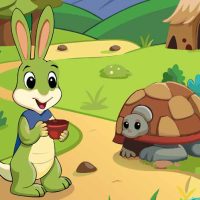
Why are nursery rhymes important for young children? I have always enjoyed watching a child light up when a familiar song begins. For young children, nursery rhymes are not only entertaining. They introduce rhythm, repetition, vocabulary, sounds, movement, and storytelling in a natural way. Singing together can also encourage children to listen carefully, remember sequences, and join conversations with greater confidence.
How Can Parents Introduce Songs at Home?
You do not need a formal lesson to introduce nursery rhymes. Sing while getting dressed, travelling, preparing meals, or tidying toys. Repetition helps because children often need to hear words several times before they use them independently.
Choose songs with clear words and actions. Encourage your child to clap, jump, tap, point, or make facial expressions. These actions help children connect language with meaning.
Which Songs Can Children Enjoy?
A Familiar Animal Rhyme
This familiar rhyme introduces repetition, rhythm, and simple vocabulary. Parents can use it as a starting point for conversations about animals, wool, colours, and sharing.
Rather than focusing only on singing the words, ask questions after the rhyme. What animal did we hear about? What colour can sheep be? What do we get from sheep? These questions extend a short song into a learning experience.
Infant Songs for Early Listening
Gentle infant songs can be useful during quiet play, cuddling, or bedtime. Songs with predictable patterns help babies and toddlers become familiar with the rhythm of spoken language.
Parents can choose songs from different cultures and languages. In Indian homes, children may hear English rhymes alongside Hindi, Marathi, Bengali, Tamil, Malayalam, or other family languages. This creates a rich listening environment.
How Can Parents Use Nursery Rhymes to Build Language?
Nursery rhymes provide repeated opportunities to hear sounds, words, and sentence patterns. Parents can pause before a familiar word and let the child complete it. This encourages active listening and recall.
You can also introduce new vocabulary through pictures and objects. After singing about animals, show pictures of a cow, sheep, duck, or cat. Ask your child to identify each one and imitate its sound.
What Can Children Learn Through Movement and Music?
Rhymes naturally encourage movement. Children can clap to a beat, march, spin, stretch, or imitate animals. These simple actions support coordination while helping children understand rhythm.
For preschoolers, songs can also introduce early mathematical ideas. Children can count claps, repeat patterns, identify sequences, and notice concepts such as fast and slow.
How Can Indian Parents Make Songs More Meaningful?
Family routines provide countless opportunities for musical learning. During a morning walk, sing a song about nature. While cooking, create a simple counting rhyme. During festivals, introduce songs connected with the family’s traditions.
Parents can also invite grandparents to share songs they remember from childhood. This can create an intergenerational connection and help children understand that music and stories can be passed from one generation to another.
How Can Digital Songs Be Used Thoughtfully?
Children may discover nursery rhymes through digital platforms, including channels such as Chuchu Chuchu TV. Chuchu Chuchu TV can be one source of songs and animated content, but parents can make screen-based listening more interactive by singing along, asking questions, and encouraging movement.
How Does Kangaroo Kids Use Songs and Rhymes?
Kangaroo Kids recognises the value of songs and rhymes in early childhood learning. Its approach encourages children to learn through exploration, creativity, communication, and play. Songs can support vocabulary, pronunciation, listening, movement, and social connection.
A rhyme can also lead naturally into other activities. After singing about an animal, children can draw it, make a simple craft, act like it, or talk about where it lives.
What Are Some Fun Rhyme Activities?
Create a Rhyme Basket
Place objects or picture cards connected to familiar songs in a basket. Let your child choose one and identify the rhyme it belongs to.
Make Animal Movements
After singing an animal rhyme, invite children to move like the animal. This combines language, imagination, physical activity, and humour.
Draw the Song
Ask children to draw what they remember from a song. Artistic accuracy isn’t necessary. Encourage them to explain their picture.
Create Family Versions
Families can make harmless variations using familiar objects, names, places, or routines. This encourages creativity while keeping the rhythm of a favourite song.
How Can Parents Balance Traditional and New Songs?
Traditional rhymes remain valuable because their repetition makes them memorable. At the same time, children can enjoy newer songs and culturally relevant music. A balanced collection can include traditional English rhymes, Indian songs, action songs, lullabies, and simple original family songs.
Parents may search for the complete “Baa Baa Black Sheep,” but children don’t need to memorise every line.
Parents can also use songs to establish routines, such as a welcome song before play or a quiet song before sleep, giving children predictable moments of connection every day.
Read More: English Poems & Nursery Rhymes for Kids
FAQs
What Ages Does Kangaroo Kids Cater To?
Kangaroo Kids offers Playgroup for children aged 2 to 3, Nursery for ages 3 to 4, Junior KG for ages 4 to 5, and Senior KG for ages 5 to 6.
What Learning Approach Does Kangaroo Kids Follow?
Kangaroo Kids uses its iCan Learning System and Fluidic Learning Methodology to support child-centred learning through exploration, creativity, communication, and play-based experiences.
Last Thoughts
Nursery rhymes can make learning joyful because children experience language through sound, repetition, movement, and imagination. Whether your child enjoys traditional rhymes, action songs, or family-created tunes, singing together can support communication and strengthen everyday connections.
Songs matter because they fit so naturally into childhood. A song can become a morning ritual, a movement game, a storytelling prompt, or a comforting bedtime tradition.
For parents who want to encourage creativity, communication, and imaginative learning through songs, stories, movement, and play, exploring Kangaroo Kids Preschool’s admission process can offer useful insight into how structured, play-based experiences help young children learn, express themselves, and grow with confidence.