A friend of mine recently invited me to accompany her on a preschool observation visit for her three-year-old son. Like many parents, she had spent weeks researching websites, reading reviews, comparing fees, and speaking to other families. By the time we arrived at the school, she already had a list of questions and expectations.
What surprised her most was not the classroom design, the facilities, or even the presentation of the curriculum. Instead, it was watching the children. She noticed how confidently they interacted with teachers, how naturally they moved between activities, and how genuinely happy they seemed. She observed a teacher kneeling to comfort a child who was feeling overwhelmed, and another teacher encouraging a group discussion in which every child had a chance to contribute.
As we left, she said, “The brochure told me what the school says about itself. The observation visit showed me who they really are.”
Her comment perfectly captures the value of a preschool observation visit. While websites and prospectuses provide information, nothing compares to seeing a school in action. A well-planned observation visit offers parents invaluable insight into the school’s culture, teaching philosophy, safety standards, and overall learning environment.
For families navigating the important decision of selecting a preschool, understanding how to conduct effective child observation and kindergarten observation can help reveal what truly matters beyond marketing materials and admissions presentations.
Why Observation Visits Matter More Than Brochures
Every preschool wants to present itself positively.
Websites highlight:
- Facilities
- Curriculum
- Teacher qualifications
- Activities
- Achievements
While these details are important, they do not always reveal daily realities.
A meaningful child observation allows parents to witness how learning actually happens.
Observation helps answer questions such as:
- Are children engaged?
- Do teachers interact respectfully?
- Is learning joyful?
- Are safety practices visible?
These observations often provide more useful information than promotional materials.
Understanding the Purpose of a Kindergarten Observation
A kindergarten observation is not simply a school tour.
It is an opportunity to observe:
- Classroom interactions
- Teaching methods
- Student engagement
- Emotional climate
- Learning experiences
The goal is to understand whether the environment aligns with your child’s needs and your family’s values.
The most effective observation visits focus on what children are doing rather than what adults are saying.
What to Look for in a Preschool During an Observation Visit
Many parents wonder what to look for in a preschool beyond facilities and infrastructure.
Several key indicators can reveal the quality of the educational experience.
Observe:
- Teacher-child relationships
- Classroom organisation
- Child engagement
- Safety procedures
- Learning opportunities
- Emotional atmosphere
Together, these factors paint a comprehensive picture of the school’s approach.
Observe the Children First
Children are often the best indicators of school quality.
During your child observation, ask yourself:
- Do children appear happy?
- Are they actively participating?
- Do they seem confident?
- Are they comfortable approaching teachers?
Engaged children typically indicate supportive learning environments.
If children appear disengaged, anxious, or unusually passive, it may warrant further investigation.
Pay Attention to Teacher-Child Interactions
The quality of teacher-child relationships is one of the strongest indicators of preschool effectiveness.
During a kindergarten observation, notice whether teachers:
- Speak respectfully
- Listen attentively
- Encourage participation
- Respond calmly to challenges
Positive interactions help children develop confidence, independence, and emotional security.
At Kangaroo Kids, nurturing relationships form the foundation of meaningful learning experiences.
Evaluate the Preschool Learning Environment
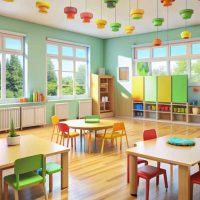
A thoughtfully designed preschool learning environment supports exploration, creativity, and development.
Look for:
- Accessible learning materials
- Organised activity areas
- Child-friendly furniture
- Opportunities for independent exploration
The environment should feel inviting rather than overly structured or restrictive.
Children learn best when they can interact meaningfully with their surroundings.
Understanding the Preschool Classroom Environment
The preschool classroom environment should support a variety of learning experiences.
Observe whether children have opportunities for:
- Group activities
- Independent exploration
- Creative expression
- Physical movement
- Sensory experiences
A balanced classroom reflects an understanding of how young children learn best.
Child Observation Reveals Emotional Safety
Safety is not limited to physical protection.
A meaningful child observation also reveals emotional safety.
Ask yourself:
- Do children feel comfortable expressing themselves?
- Are mistakes treated as learning opportunities?
- Do teachers respond with patience?
Emotionally secure children are more likely to take risks, ask questions, and engage fully in learning.
Look Beyond Preschool Facilities
Attractive preschool facilities can certainly enhance learning experiences.
However, facilities alone do not guarantee educational quality.
A beautiful classroom means little if:
- Children are disengaged
- Teachers lack connection
- Learning feels rigid
Use observation visits to understand how spaces are actually used.
The most effective schools combine strong facilities with meaningful educational experiences.
Practical Contact With and Observation of Facts and Events
Educational experts often emphasise the value of practical contact with and observation of facts and events when evaluating learning environments.
In simple terms, seeing a school in action provides insights that no brochure can offer.
Parents can observe:
- Real teaching practices
- Student behaviour
- Daily routines
- Classroom dynamics
This firsthand experience helps families make more informed decisions.
Observe Learning Through Play
Many high-quality preschools embrace play-based learning.
During your kindergarten observation, notice whether children are:
- Exploring
- Building
- Creating
- Investigating
- Collaborating
Learning through play encourages:
- Creativity
- Problem-solving
- Communication
- Critical thinking
These experiences often contribute significantly to long-term development.
How Schools Conduct Preschool Assessment
Assessment is another important area to explore.
Ask how the school approaches preschool assessment.
Progress in early childhood should be evaluated through:
- Observation
- Documentation
- Developmental tracking
- Individualised support
Assessment should guide learning rather than create unnecessary pressure.
Schools focused on development understand that every child progresses at their own pace.
Child Observation Examples Preschool Educators Use
Many schools rely on child observation examples that preschool educators document regularly.
These observations may include:
- Social interactions
- Language development
- Problem-solving skills
- Emotional responses
- Learning interests
Observational assessment provides a richer understanding of development than standardised testing alone.
How to Write a Child Observation Report: Why Parents Should Ask
You do not need to learn how to write a child observation report document yourself.
However, understanding how schools document development can be valuable.
Ask:
- How is progress recorded?
- How often are observations shared?
- How are learning goals established?
Schools that maintain meaningful observational records often provide deeper insights into children’s growth.
Questions to Ask a Preschool During Your Visit
Observation is important, but conversations matter too.
Useful questions to ask a preschool include:
- How are children supported emotionally?
- How do teachers manage transitions?
- How is learning personalised?
- How are parents kept informed?
- What safety procedures are followed?
These questions often reveal the school’s educational priorities.
Choosing a Preschool: Looking Beyond Academics
Many parents approach choosing a preschool with academics as their primary concern.
While literacy and numeracy are important, preschool should also support:
- Social development
- Emotional growth
- Creativity
- Communication
- Independence
Observation visits help parents evaluate these equally important areas.
Why Preschool Readiness Is About More Than Skills
The concept of preschool readiness is often misunderstood.
Readiness is not simply about:
- Counting
- Writing
- Recognising letters
It also includes:
- Confidence
- Emotional regulation
- Curiosity
- Social competence
Observation visits help parents determine whether a school supports holistic readiness.
What Kangaroo Kids Observation Visits Reveal
Parents visiting Kangaroo Kids often notice several distinctive features:
Child-Centred Learning
Children actively participate in their learning experiences.
Strong Teacher Relationships
Teachers build meaningful connections with every child.
Play-Based Exploration
Learning occurs through discovery, inquiry, and engagement.
Holistic Development
Academic, emotional, social, and physical growth are equally valued.
Safe and Nurturing Environments
Children feel secure, respected, and supported.
These elements become evident through direct observation.
Red Flags Parents Should Not Ignore
Observation visits can also reveal potential concerns.
Watch for:
- Excessive teacher-directed instruction
- Limited child participation
- Frequent behavioural conflicts
- Poor supervision
- Unresponsive staff
While no school is perfect, consistent concerns deserve careful consideration.
Last Thoughts
A preschool observation visit is one of the most valuable tools available to parents. It provides an authentic glimpse into how a school functions day to day and allows families to evaluate factors that brochures and websites cannot fully convey.
Through thoughtful child and kindergarten observations, parents can gain insight into teaching quality, emotional climate, classroom culture, safety practices, and overall child engagement. These observations often reveal whether a school genuinely supports children’s development or simply promotes attractive marketing messages.
At Kangaroo Kids, observation visits offer families an opportunity to experience firsthand the school’s commitment to child-centred learning, meaningful relationships, play-based exploration, and holistic development. By seeing classrooms in action, parents can make confident decisions based on real experiences rather than assumptions.
For families seeking environments where curiosity, creativity, confidence, and meaningful learning are nurtured every day, exploring a classroom observation experience at Kangaroo Kids can provide valuable insight into how exceptional early childhood education supports children in becoming capable, engaged, and enthusiastic lifelong learners.