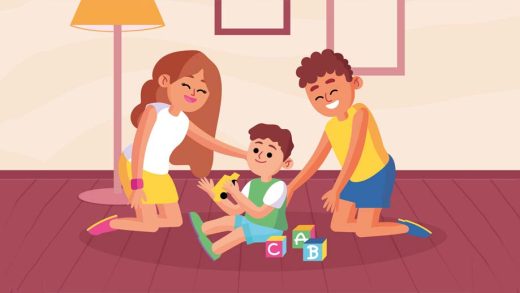
One evening, while visiting a friend’s home, I watched his five-year-old son trying to build a tall tower with wooden blocks. Each time the tower reached a certain height, it toppled over. After a few failed attempts, the child looked frustrated and turned toward his father for help. Instead of immediately fixing the problem, his father asked a simple question: “What do you think is making it fall?”
The little boy paused, stared at the blocks for a moment, and then slowly replied, “Maybe the big blocks should go at the bottom.” He carefully rearranged the structure, tried again, and this time the tower stood taller than before. What struck me was not the tower itself, but the thinking behind it. In that small moment, the child was observing, testing ideas, and learning through experience.
There was learning for everyone involved. The child discovered confidence through trial and error. The parent realised that guidance does not always mean giving answers. And I walked away, reminded of how naturally children can think critically when given the opportunity. It was a perfect example of the problem-solving process unfolding in real life.
At schools like Kangaroo Kids, these moments are intentionally nurtured every day. Rather than simply teaching children what to think, the focus is on helping them learn how to think.
What are Problem-Solving Skills?
Before exploring how children develop these abilities, it helps to understand, in simple terms, what problem-solving skills are.
Problem-solving skills refer to a child’s ability to:
- Identify challenges
- Think of possible solutions
- Test ideas
- Learn from outcomes
These abilities are not limited to academics. They influence social interactions, emotional regulation, creativity, and independence.
The problem-solving process begins much earlier than many parents realise, often during simple play experiences in early childhood.
Why Problem-Solving Skills Matter in Early Childhood
The early years are critical for brain development. During this phase, children constantly encounter situations that require thinking and decision-making.
Benefits of Early Problem-Solving
Children who develop these skills early are more likely to:
- Adapt to new situations
- Build confidence
- Think independently
- Handle frustration effectively
This is why schools increasingly focus on problem-solving teaching methods rather than rote memorisation.
The Problem-Solving Process in Young Children
The problem-solving process in early childhood is often simple but highly meaningful.
Stages of Problem-Solving
The common stages of problem-solving include:
- Identifying the problem
- Thinking of possible solutions
- Trying a solution
- Observing the result
- Adjusting if needed
Children naturally move through these stages during play, conversations, and everyday experiences.
At Kangaroo Kids, educators intentionally create environments where this process can happen organically.
Problem-Solving Skills Examples in Daily Life
Many parents associate problem-solving only with academics, but young children practice it constantly.
Problem-Solving Skills Examples
- Figuring out how to share toys with friends
- Building a stable block structure
- Finding a missing object
- Deciding how to complete an art activity
These examples of problem-solving skills show that learning happens through interaction and exploration, not just instruction.
The Kangaroo Kids Approach to Problem-Solving
At Kangaroo Kids, learning is designed to encourage inquiry, creativity, and independent thinking.
Key Principles
- Child-led exploration
- Open-ended activities
- Guided questioning
- Experiential learning
Rather than giving children direct answers, teachers encourage them to think through the problem-solving process themselves.
Problem-Solving Method of Teaching at Kangaroo Kids
The problem solving method of teaching focuses on helping children arrive at solutions independently.
How It Works
Teachers may ask questions like:
- “What do you think will happen if…?”
- “Can you think of another way to do this?”
- “Why do you think that happened?”
These questions guide children without removing the opportunity to think critically.
This approach strengthens both confidence and cognitive flexibility.
Learning Through Play and Exploration
Play is one of the most effective ways to develop problem-solving abilities.
Activities That Support Problem-Solving
- Building blocks
- Puzzle-solving
- Role-play scenarios
- Group games
These experiences help children naturally move through the steps of the problem solving method in a low-pressure environment.
The Role of Open-Ended Questions
One of the most effective tools used at Kangaroo Kids is open-ended questioning.
Why It Matters
Open-ended questions:
- Encourage reflection
- Promote creativity
- Develop communication skills
For example:
- “How else could we solve this?”
This supports the problem solving approach by encouraging children to think beyond one fixed answer.
Read More: Creativity Over Coding: The Real Early Tech Skill
How to Improve Problem-Solving Skills in Children
Parents often ask how to improve problem solving skills at home. The answer lies in creating opportunities for children to think independently.
Practical Strategies
1. Allow Children to Make Choices
Simple decisions build confidence and reasoning abilities.
2. Encourage Trial and Error
Mistakes should be seen as part of learning.
3. Ask Reflective Questions
Instead of solving problems immediately, ask:
- “What could you try next?”
4. Use Everyday Situations
Cooking, organising toys, or planning activities can all support the problem-solving process.
Collaborative Learning and Problem-Solving
Children often solve problems more effectively when working together.
Benefits of Group Activities
- Exposure to different ideas
- Improved communication
- Shared decision-making
At Kangaroo Kids, collaborative experiences are an important part of the problem solving approach.
Problem-Solving in Modern Education
Traditionally, many Indian classrooms focused heavily on memorisation and fixed answers. However, modern education is evolving.
Current Shift
There is increasing recognition that children need:
- Creativity
- Critical thinking
- Adaptability
This has made the problem solving method of teaching more relevant than ever.
At Kangaroo Kids, the emphasis is on preparing children not just for exams, but for real-life situations.
The Role of Teachers in Developing Problem-Solving Skills
Teachers play a critical role in shaping how children approach challenges.
Effective Teacher Practices
- Encouraging curiosity
- Avoiding immediate correction
- Providing safe opportunities for experimentation
These methods help children develop problem-solving skills with confidence.
Emotional Growth Through Problem-Solving
Problem-solving is not only cognitive but also emotional.
Skills Children Develop
- Patience
- Resilience
- Emotional regulation
When children successfully work through challenges, they develop self-belief and persistence.
This emotional aspect is an important part of the problem solving process.
Common Mistakes Adults Should Avoid
1. Solving Problems Too Quickly
Children lose opportunities to think independently when adults immediately step in.
2. Focusing Only on Correct Answers
Learning often happens during the process, not just in the outcome.
3. Discouraging Mistakes
Mistakes are essential for experimentation and growth.
Avoiding these habits helps children strengthen their natural problem solving approach.
Long-Term Benefits of Problem-Solving Skills
Children who develop strong problem-solving abilities early often:
- Adapt better to challenges
- Show greater creativity
- Communicate more effectively
- Perform better academically and socially
These long-term outcomes highlight the importance of helping children develop problem-solving skills from an early age.
Final Thoughts
Children are natural problem-solvers. Every time they build, explore, question, or experiment, they engage in the problem-solving process. The role of adults is not to remove challenges but to create supportive environments where children feel safe thinking independently.
At Kangaroo Kids, this philosophy is deeply woven into the learning experience. Through play, exploration, and thoughtful guidance, children are encouraged to discover solutions on their own, building confidence, creativity, and resilience along the way.
For parents in India and around the world, the message is simple: when children are given the space to think, question, and try again, they don’t just learn answers: they learn how to learn. For parents who want to nurture strong problem-solving and critical thinking abilities in a structured learning environment, exploring the admission process at Kangaroo Kids Preschool can provide valuable insight into how curiosity, exploration, and everyday challenges are transformed into meaningful learning experiences.