“How is it that children remember some new words so easily?”
A friend once asked me this after her son, following a sneeze, pointed to his nose and said “sneeze”, which shocked her. We both realised that vocabulary sticks when children can connect it to their own bodies and everyday moments.
Learning the names of body parts is language practice; it helps children notice, describe, and understand themselves.
Why Indian Parents Should Teach Body Vocabulary With Respect
Children hear names of body parts at home, in school, at the doctor’s clinic, and during play. Giving them accurate, age-appropriate language helps them clearly describe an itch, an injury, or a need. Learning body parts and names should be calm, matter-of-fact, and never shameful.
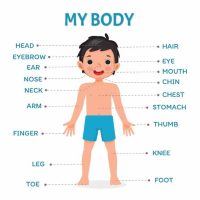
Begin with visible parts that children can point to: head, eyes, ears, nose, mouth, neck, arms, hands, legs, feet, and toes. Use the same respectful words consistently. Children learn faster when adults avoid confusing nicknames, especially when discussing health, safety, or privacy.
How Indian Parents Can Explain the Head and Face
The head holds the brain, which helps us think, remember, move, and learn. Hair grows on the head. Eyes help us see colours, faces, books, and objects. Ears help us hear voices, music, and sounds around us.
The nose helps us smell and breathe. The mouth is used for eating, drinking, talking, smiling, and singing. Teeth help us chew food, while the tongue helps us taste and form many sounds. Teaching each body part names with a simple function encourages children to use words in meaningful sentences.
Make Sense-Organ Learning Active
Play a gentle “I spy” game for sight, listen for a bell or bird for hearing, and identify familiar smells such as a flower or orange peel. Ask children which part helps them with each task. Explain that skin covers the body and helps us feel hot, cold, soft, rough, and ticklish things.
How Indian Parents Can Teach Arms, Hands, and Fingers
Shoulders connect the arms to the body. Arms, elbows, wrists, hands, and fingers help children reach, carry, hug, draw, eat, and play. Hands are important for independence, from buttoning a shirt to holding a spoon.
Try a hand-print activity with paint or coloured pencils. Trace each finger and say its name. Young children do not need to memorise every term immediately. Repetition during enjoyable activities is more effective than drilling.
Connect Words to Healthy Habits
Use handwashing time to review vocabulary. Ask children to wash their palms, the backs of their hands, fingers, and nails with soap and water. Remind them to cover coughs with their elbow and avoid putting fingers in their mouths. These routines link body part names to hygiene and practical self-care.
How Indian Parents Can Describe the Torso and Internal Organs
The torso is the middle part of the body, including the chest, back, tummy, and hips. It supports posture and protects important organs. Children can understand that organs are body parts inside us that do special jobs.
The heart pumps blood around the body. The lungs help us breathe. The stomach helps break down food after we eat. The brain sends messages that help us move, feel, think, and remember. Use simple, truthful explanations. This builds English vocabulary for body parts and health awareness.
How Indian Parents Can Teach Legs, Feet, and Movement
Hips, legs, knees, ankles, feet, and toes help us stand, walk, run, jump, dance, and balance. During a walk, invite your child to notice how knees bend and feet touch the ground.
A movement game can make body part name practice lively.
Call out, “Touch your knees,” “Raise one arm,” or “Stand on your toes.” Let children take turns being the caller. This supports listening, coordination, confidence, and vocabulary. Adapt actions for each child’s mobility and comfort.
Use Songs, Books, and Drawing
Songs with actions make repeated words enjoyable. Picture books and a child-friendly body outline can also help. Invite children to draw a person, then label familiar parts together. Ask questions such as, “Can you name a part of a body that helps you jump?” The answer may be legs, feet, or knees, and the conversation matters as much as one correct response.
How Indian Parents Can Teach Privacy and Body Safety
Teach children that their body belongs to them. Use correct names for body parts and explain that private parts are the areas covered by underwear or a swimsuit. Tell children they can say no to unwanted touch, even from someone familiar, except when essential care or a health examination is needed and a trusted adult is present.
Encourage children to tell a safe adult if they feel worried, uncomfortable, hurt, or confused. Avoid telling children to keep secrets about their bodies. Instead, explain the difference between a pleasant surprise, which will be shared soon, and a secret that makes them uneasy. Calm, open conversations build trust and help children seek support.
Read More: Teaching Preschoolers about the Importance of Handwashing
FAQs for Indian Parents
At what age should children learn body-part vocabulary?
Begin naturally in infancy and toddlerhood through daily routines, songs, books, and play. Add more specific words as children show interest and understanding. The aim is useful communication, not memorising a long list at once.
How should I respond when my child asks about private body parts?
Answer simply, honestly, and without embarrassment. Use correct terms, explain that private parts are private, and reinforce body-safety rules. If you do not know an answer, say you will find out together from a reliable health source or professional.
Last Thoughts
Teaching body part names helps children build language, independence, health awareness, and personal safety. When children understand their bodies, they can better express needs, follow healthy routines, and grow with confidence.
For parents seeking a structured setting that supports communication, creativity, and imaginative learning, the admissions process at Kangaroo Kids Preschool can offer context. Kangaroo Kids shows how stories, role play, and play-based experiences can make vocabulary, self-expression, and healthy habits meaningful for children.