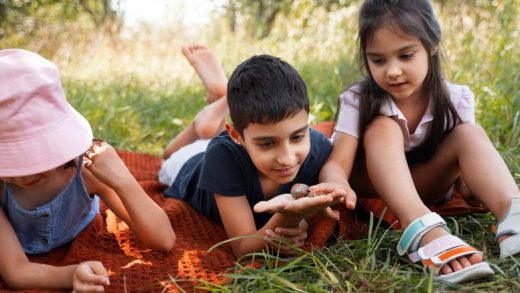
I have a cousin whose little son is famous in the family for asking the most unexpected questions. One moment, he will ask why the moon follows the car at night, and the next, he will wonder how fish sleep underwater. Sometimes his parents answer confidently. Other times, they simply stare at each other and laugh because they genuinely do not know what to say. What stands out is not just the questions themselves, but the excitement with which he asks them. There is wonder in his voice every single time.
One evening, he came home from preschool unusually excited. He ran straight into the living room and proudly announced that his teacher had answered one of his questions in class. Apparently, he had asked something so thoughtful that the teacher paused the activity, explained the answer to everyone, and then encouraged the whole class to clap for him for asking such a wonderful question. I still remember the pride on his face as he narrated the story. He did not feel silly for asking. He felt seen, valued, and celebrated.
That moment stayed with me because it highlighted something many modern classrooms still struggle to do well: nurture curiosity in children. Too often, education systems focus heavily on right answers, memorisation, and structured outcomes. But true learning begins with questions. A curious child is not simply being talkative or distracted. Curiosity reflects active thinking, imagination, observation, and engagement with the world.
At Kangaroo Kids, nurturing curiosity is considered an essential part of early childhood education. The classroom is designed not only to teach information, but also to encourage children to ask questions, explore ideas, experiment confidently, and develop a lifelong love for learning.
Why Curiosity in Children Matters So Much
Young children are naturally curious.
They constantly:
- Ask questions
- Observe details
- Experiment with objects
- Explore environments
- Seek explanations
This natural curiosity in children plays an important role in:
- Brain development
- Language growth
- Problem-solving
- Creativity
- Emotional confidence
Research from developmental psychology consistently shows that curiosity strengthens learning because children engage more deeply with information they genuinely want to understand.
Why Modern Education Must Protect Curiosity
In many traditional educational systems, children are rewarded mainly for:
- Correct answers
- Quiet behaviour
- Memorisation
- Following instructions
While structure has its place, excessive academic pressure can sometimes discourage questioning and independent exploration.
Children may begin to fear:
- Asking “too many” questions
- Giving wrong answers
- Thinking differently
This is why supporting curiosity in children has become increasingly important in modern preschool education.
How the Classroom Learning Environment Shapes Curiosity
A child’s willingness to ask questions depends heavily on the emotional tone of the classroom learning environment.
Children become more curious when they feel:
- Emotionally safe
- Encouraged
- Listened to
- Respected
- Free from ridicule
At Kangaroo Kids, teachers aim to create classroom spaces where questions are welcomed rather than dismissed.
Children learn best when they feel emotionally secure enough to explore ideas openly.
Read More: Small Group Learning: Why “Less is More” in Classrooms
Why Curiosity Builds Critical Thinking Skills for Kids
Curiosity and thinking skills are deeply connected.
When children ask:
- “Why?”
- “How?”
- “What happens if…?”
…they are already developing early reasoning abilities.
Strong critical thinking skills for kids begin with:
- Observation
- Exploration
- Questioning
- Problem-solving
For example:
- A child wondering why leaves fall is beginning scientific thinking
- A child asking why friends feel sad is developing empathy and emotional awareness
Curiosity encourages children to think actively rather than passively absorb information.
Learning Through Exploration Helps Children Understand Better
Young children learn most effectively through direct experience.
This is why learning through exploration remains central to modern early childhood education.
Children understand concepts more deeply when they can:
- Touch
- Observe
- Experiment
- Move
- Interact socially
For example:
- Water play introduces science concepts
- Nature walks encourage observation
- Sensory exploration strengthens attention and curiosity
At Kangaroo Kids, children are encouraged to actively participate in the learning process rather than simply memorise information.
Why Active Learning in Classroom Environments Matters
Passive learning often limits curiosity.
In contrast, active learning in classroom environments encourages children to:
- Participate
- Explore ideas
- Ask questions
- Collaborate
- Experiment creatively
This approach strengthens:
- Confidence
- Communication skills
- Cognitive flexibility
- Emotional engagement
Children learn more deeply when they feel involved in the learning experience.
Child-Centred Learning Encourages Independent Thinking
Modern preschool education increasingly values child-centred learning.
This approach recognises that:
- Every child learns differently
- Curiosity develops naturally
- Children need opportunities to explore independently
At Kangaroo Kids, activities are designed to allow children to:
- Make observations
- Explore ideas freely
- Express thoughts confidently
- Participate creatively
This child-centred philosophy helps nurture curiosity in children in meaningful ways.
Why Student Engagement in Classroom Learning Matters
Children who feel emotionally engaged learn more effectively.
Strong student engagement in classroom settings often appears when children:
- Ask questions eagerly
- Participate voluntarily
- Show excitement about activities
- Continue conversations at home
This type of engagement reflects genuine learning rather than surface-level memorisation.
How Teachers Can Encourage Curiosity in Children
Teachers play a powerful role in shaping curiosity.
Simple responses can either encourage or discourage questioning.
For example:
- “That’s an interesting question.”
- “Let’s explore that together.”
- “What do you think?”
These responses help children feel:
- Heard
- Valued
- Confident
At Kangaroo Kids, educators aim to create emotionally supportive interactions that encourage active participation and curiosity.
Why Curiosity Supports Emotional Confidence
Curious children often become more emotionally confident because they learn:
- Their ideas matter
- Questions are valuable
- Exploration is encouraged
- Mistakes are an acceptable part of learning
This emotional safety strengthens willingness to:
- Participate socially
- Express ideas
- Take intellectual risks
Healthy curiosity in children, therefore, supports both emotional and cognitive growth.
Why Curiosity Needs More Space in Indian Education
In many Indian educational settings, children still experience strong academic pressure from an early age.
Parents often worry about:
- Academic readiness
- Competitive performance
- Structured learning outcomes
While these concerns are understandable, curiosity should not be sacrificed in the process.
The modern world increasingly values:
- Creativity
- Adaptability
- Innovation
- Independent thinking
These abilities begin developing when children are encouraged to question, explore, and think freely.
How Play-Based Learning Encourages Curiosity
Play naturally stimulates:
- Imagination
- Exploration
- Problem-solving
- Social interaction
This is why play-based learning environments often strengthen curiosity in children more effectively than rigid instructional models.
At Kangaroo Kids, storytelling, sensory exploration, role play, collaborative learning, movement activities, and creative inquiry are integrated into everyday classroom experiences.
Curiosity and Communication Development
Children who ask questions often strengthen:
- Vocabulary
- Sentence formation
- Listening skills
- Conversation abilities
Curiosity naturally supports the development of communication because children become motivated to express ideas and seek explanations.
This is why emotionally responsive classrooms are so important during early childhood.
Why Indian Parents Should Encourage Questions at Home
Curiosity should not stop at school.
Parents can nurture curiosity by:
- Listening patiently
- Encouraging exploration
- Reading stories together
- Asking open-ended questions
- Exploring nature
- Allowing creative play
Children thrive when both home and school environments value inquiry and imagination.
Common Mistakes That Suppress Curiosity
Dismissing Questions Too Quickly
Children may stop asking questions if they feel ignored repeatedly.
Overcorrecting Mistakes
Fear of being wrong can reduce willingness to explore ideas.
Prioritising Memorisation Over Exploration
Curiosity weakens when learning becomes overly rigid.
Recognising these patterns helps adults better support curiosity in children.
Long-Term Benefits of Curiosity
Children who remain curious often:
- Enjoy learning naturally
- Develop stronger creativity
- Adapt more confidently
- Build better problem-solving abilities
- Communicate more effectively
Curiosity becomes a lifelong learning advantage.
Last Thoughts
The pride on my cousin’s son’s face that evening remains unforgettable because it reflected something deeper than simply receiving praise from a teacher. He felt respected for thinking independently. He learned that asking thoughtful questions was not disruptive or inconvenient, but valuable and meaningful.
That is the true power of nurturing curiosity in children. Curiosity is not merely a childhood phase. It is the foundation of creativity, confidence, innovation, communication, emotional intelligence, and lifelong learning. Children who feel safe enough to ask questions often become adults who are willing to think independently, solve problems creatively, and engage deeply with the world around them.
At Kangaroo Kids, curiosity is encouraged through emotionally supportive teaching practices, storytelling, collaborative activities, sensory exploration, play-based learning, and thoughtfully designed classroom experiences that allow children to participate actively rather than passively absorb information.
For families seeking learning environments that nurture creativity, communication, imaginative exploration, emotional confidence, and child-centred inquiry from the earliest years, understanding the educational philosophy and classroom approach at Kangaroo Kids can provide valuable insight into how storytelling, role play, sensory exploration, collaborative learning, and play-based experiences are transformed into meaningful opportunities that celebrate curiosity and joyful learning every day.