My daughter once spent ten minutes watching soap bubbles in a steel bowl. She asked, “Why do they always come together?”. I said something about air and water but honestly, I didn’t know.
Later that night I realised—this is how science begins. Not with a lab coat, but with curiosity in the bathroom.
What STEM Looks Like at Home
STEM—Science, Technology, Engineering, Mathematics. Sounds big, almost scary. But for a four-year-old, it’s just curiosity, masti, and “I want to see”.
When your child is lining up toys in a pattern, say from small to big, or keeps pouring water till it spills from the glass, that’s actually an early STEM activity for kids which your child is doing naturally. STEM is not about teaching; it’s about observing and practically doing things.
In Indian homes, life itself gives endless material. Pressure cooker whistles, ceiling fans, rangoli powder, the neighbour’s scooter that won’t start—each moment hides a lesson if you let them look closely.
When Curiosity Starts: The “Why” Phase
Parents often wonder what age kids start asking why. It’s usually around three. From then on, “why” never ends. Because everything is new: a mosquito bite, rain hitting the window, the smell of onions frying.
Instead of saying, “Because it is like that,” ask, “What do you think?”. Their guesses will surprise you. Once my child said, “The moon follows us because it likes our car.”. Perfectly logical in her world. That’s the base of reasoning—forming patterns from experience.
5 Little Experiments with Big Wonder
1. Salt and Sand
Mix salt in water, then sand. Ask what changed. Let them taste (a little) and watch. They’ll learn what dissolves and what doesn’t. No charts, just taste and sight.
2. Floating Test
During bath time, drop a spoon, a ball, and a mango leaf in a bucket. Guess, then check. This simple play counts among the best STEM ideas for kids—prediction, observation, conclusion.
3. Tower Time
Stack cups until they tumble. Pause, rebuild, shift the base. That’s engineering thinking. When it falls again, that’s data.
4. Kitchen Ratios
When making poha, let them measure spoons of rice and water. They learn numbers and proportion without calling it math.
5. Recycling Crafts
Use old cartons, bottle caps, or shoe boxes. Ask, “Can we build something useful?”. It’s one of those STEM projects for kids that combine design and responsibility.
Indian Homes Are Natural Classrooms
Think of everyday scenes. You don’t need imported kits; you need time to watch with them.
- Rangoli teaches geometry.
- Chapati dough explains elasticity.
- Coconut scraping shows friction.
- A swing under a banyan tree shows momentum.
The “Why” Game
If you’ve ever counted how many times a child asks “why” in a day, stop. It’ll only exhaust you. But remember, that’s how logic forms.
One morning my daughter asked, “Why doesn’t the ceiling fan fall?”. We pulled a chair, looked at the hook, found dust, and talked about screws. That half-hour became physics. These tiny setups are practical STEM activities for kindergarten—real, local, memorable.
Keep Technology Real
Parents hear “Technology” and think screens. But a spoon is technology. So is a rolling pin. Whenever a child uses a tool to achieve a result, that’s technology.
In our house, the hand mixer once became a “rain machine.”. My daughter pressed the button, heard the whir, and said, “It sounds like a storm!”. That sound—vibration, rhythm, imitation—is learning. It’s how STEM activities for kids stay alive without digital noise.
Math Hidden Everywhere
Count bangles while tidying up. Compare cup sizes when pouring milk. Divide biscuits equally. These daily patterns are the roots of math. Children understand fairness before fractions. Start there.
Mistakes Make the Magic
Let them spill, fail, rebuild. If their paper boat sinks, don’t rush to rescue. Ask what could make it float longer. Maybe thicker paper?. That repeat loop is the heartbeat of STEM projects for kids—question, test, observe, adjust.
Parents as Partners
You’re not the examiner; you’re the co-explorer. The most powerful learning moments happen between “I don’t know” and “Let’s see.”.
You don’t need a special corner, but having one helps—a shelf with magnets, paper clips, old spoons, marbles, and thread. Don’t label it a lab. Just call it “the shelf where we try things.”.
The Kangaroo Kids Way
At Kangaroo Kids International Preschool, learning grows out of curiosity. Children build, mix, compare, and question—every single day.
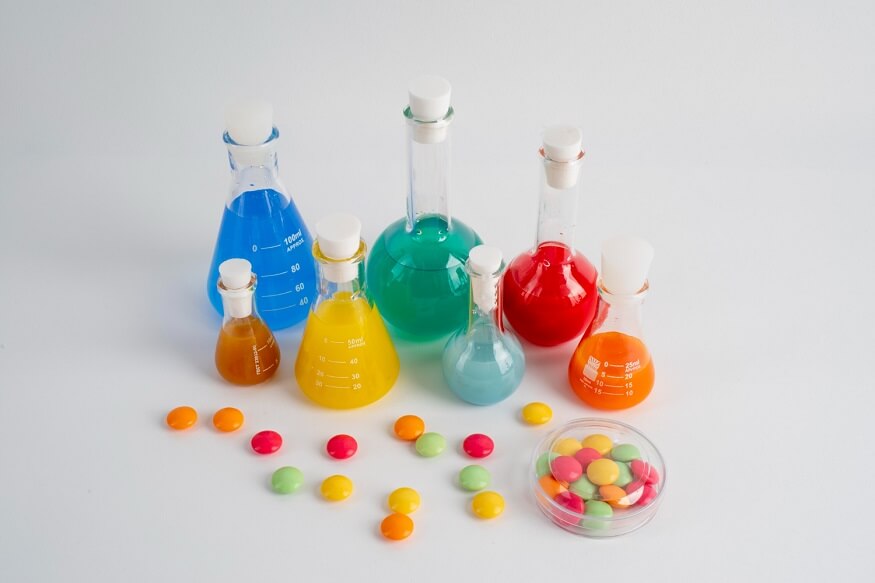
Teachers turn play into exploration: colours mixing, blocks balancing, seeds sprouting. This is real learning, quietly happening.
If you’re looking for a place where your child’s “why” is welcomed, Kangaroo Kids is that place. Because every great mind starts small, usually in someone’s kitchen, holding a spoon full of wonder.