In many Indian households and classrooms, children are often praised and appreciated for giving the “right” answer quickly. From early maths drills to competitive exams, accuracy and speed are highly valued.
While knowing correct answers has its place, the rapidly changing world our children are growing into demands much more. Today, success depends less on memorised responses and more on the ability to think, adapt, and solve unfamiliar problems.
Raising children who can ask questions, explore possibilities, and persist through challenges means focusing on problem-solving skills, not just answers. We will explore why nurturing problem-solving skills for kids matters more than ever, how Indian parents and educators can shift their approach, and practical ways to understand how to improve problem-solving skills in daily life.
Answer-Finders vs Problem-Solvers
An answer-finder is trained to recall information and reproduce it accurately. A problem-solver, on the other hand, learns how to:
- Analyse situations
- Think critically
- Experiment with solutions
- Learn from mistakes
In traditional academic systems, answer-finding is often rewarded because it is easy to test and measure. However, real-life challenges rarely come with fixed answers. This is why problem-solving skills are becoming central to education and parenting.
Why Problem-Solving Skills Matter Today

Preparing for an Uncertain Future
Careers and technologies are evolving rapidly. Many of the jobs children will do in the future do not yet exist. Children with strong problem-solving skills grow into adults who can adapt, innovate, and collaborate effectively.
Building Confidence and Independence
When children are encouraged to solve problems independently, they develop confidence in their abilities. Each successful attempt reinforces the belief that they can handle challenges.
The Indian Context: Rethinking Success
In India, academic achievement is deeply linked to social recognition and opportunity. Exams, ranks, and results often dominate conversations about education. Children may become afraid to make mistakes, fearing they will be judged or corrected immediately. This fear can limit the development of problem-solving skills.
Shifting from answer-focused learning to problem-focused learning requires a cultural mindset change, one that values curiosity, effort, and reasoning as much as correctness.
What Are Problem-Solving Skills?
Problem-solving skills comprise abilities that help individuals identify challenges and devise practical solutions. For children, this includes:
- Recognising a problem
- Thinking of possible solutions
- Trying out ideas
- Evaluating outcomes
These skills are not limited to academics. They apply to social situations, daily routines, and emotional challenges.
Problem-Solving Skills for Kids Begin Early
Even toddlers display early problem-solving behaviours when they figure out how to reach a toy or stack blocks. These everyday experiences form the foundation of problem-solving skills for kids. The role of adults is to support, not replace, this natural learning process.
Why Too Much Help Can Limit Learning
In many Indian families, adults step in quickly to help children. While support is essential, solving every problem for a child can unintentionally send the message that the child is incapable. Allowing children time to struggle helps them develop persistence and resilience.
Encouraging Problem-Solving at Home
Ask Questions Instead of Giving Answers
When a child faces a challenge, try asking:
- “What do you think we can do?”
- “What have you tried already?”
These open-ended questions guide children to think independently and strengthen problem-solving skills.
Embrace Mistakes as Learning Opportunities
Mistakes are essential to learning. Instead of focusing on what went wrong, discuss what can be done differently next time.
Involve Children in Daily Decisions
Simple activities such as planning a meal or organising toys offer valuable opportunities for problem-solving practice. These experiences make problem-solving skills for kids practical and relevant.
The Role of Play in Developing Problem-Solving Skills
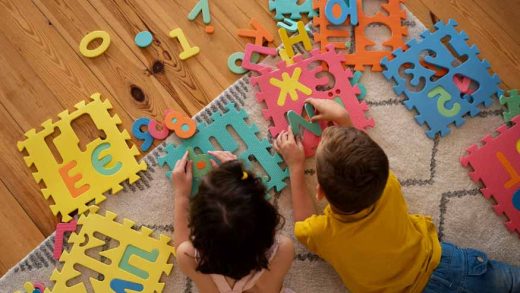
Play is one of the most powerful tools for building cognitive abilities. Games, puzzles, and building activities require children to think, plan, and adapt. In Indian homes, traditional games such as board games naturally encourage strategic thinking and cooperation.
Problem-Solving in the Classroom
Teachers as Facilitators, Not Answer-Givers
Teachers who encourage inquiry rather than rote responses help children develop a deeper understanding. Asking “how” and “why” questions fosters analytical thinking.
Group Work and Collaboration
Group activities allow children to hear different perspectives and work toward shared solutions. These interactions build both cognitive and social problem-solving abilities.
Emotional Aspects of Problem-Solving
Problem-solving is not merely a cognitive skill; it is also an emotional skill. Children must learn to manage frustration, persist through difficulty, and stay calm under pressure. Supporting emotional resilience helps children approach problems with confidence rather than fear.
Shifting Praise: Effort Over Accuracy
Instead of praising only correct answers, acknowledge effort, creativity, and persistence. Statements such as “I like how you tried different ways” reinforce the process of problem-solving rather than merely the outcome.
Beyond Right Answers
In a world filled with uncertainty and complexity, raising children who can think, adapt, and innovate is far more valuable than raising children who can simply recall answers. By prioritising problem-solving skills and encouraging curiosity, parents and educators can prepare children for the realities of the future.
When we focus on raising problem-solvers rather than answer-finders, we empower children not just to succeed in exams, but to navigate life with confidence. At Kangaroo Kids, our iCan Learning System is designed to foster critical thinking and innovation.