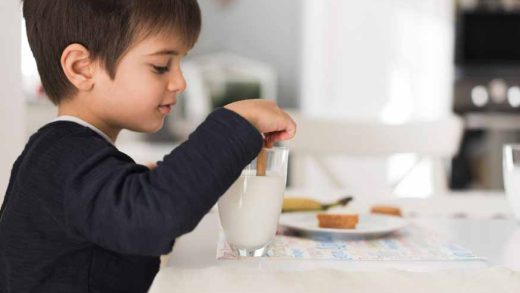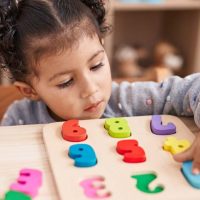
When people think of math, they often imagine textbooks, worksheets, and classroom lessons. However, for young children, math begins much earlier, and in far more natural ways. Before a child ever holds a pencil, they are already exploring patterns, quantities, and relationships through everyday experiences. In homes across India and around the world, simple daily activities, such as sorting dal, counting steps, or sharing snacks, quietly introduce children to mathematical thinking. These experiences form the foundation of lifelong learning.
Understanding how children learn through play can help parents and educators embrace math activities for preschoolers that are meaningful, engaging, and effective. Rather than forcing formal methods too early, nurturing curiosity through real-life interactions fosters a deeper, more lasting understanding of numbers.
The Science Behind Early Numeracy
What Are Numeracy Skills in Early Childhood?
Numeracy is more than just counting numbers. It includes a child’s ability to:
- Recognise patterns
- Compare quantities
- Understand shapes and sizes
- Solve simple problems
Developing numeracy skills in early childhood is similar to learning a language. Children absorb mathematical concepts naturally when they are exposed to them in everyday contexts. For example, when a child notices that one plate has more biscuits than another, they are already engaging in mathematical thinking.
Why Play Is the Best Teacher
Young children learn best through exploration, not instruction. Play allows them to:
- Experiment freely
- Make mistakes without fear
- Discover patterns independently
This is why math activities for preschoolers should be rooted in play rather than rote memorisation. Play-based learning activates curiosity, which is the true driver of understanding.
Why Worksheets Are Not Enough
The Limitations of Traditional Methods
Worksheets often focus on repetition rather than understanding. While they may help with memorisation, they do not always build conceptual clarity. For preschoolers, sitting still and completing worksheets can feel restrictive and disengaging. More importantly, it disconnects math from real-life experiences.
Real-Life Learning Is More Effective
Children grasp concepts better when they can see and touch what they are learning. For example:
- Counting actual objects is more meaningful than counting printed pictures
- Sorting real items builds stronger connections than circling answers
This is why math activities for preschoolers rooted in daily life are far more effective than traditional worksheets.
Everyday Math in Indian Homes
Sorting Dal and Grains
One of the simplest and most powerful math activities involves sorting pulses like dal, rice, or beans.
What Children Learn:
- Classification and grouping
- Similarities and differences
- Early counting skills
This everyday activity is a perfect example of a play-based math activity that requires no special materials.
Counting Steps and Movements
Climbing stairs or walking outdoors provides opportunities to count naturally.
What Children Learn:
- Number sequence
- Rhythm and pattern
- One-to-one correspondence
Such math activities for preschoolers turn routine movements into valuable learning experiences.
Cooking and Measuring
Involving children in the kitchen can introduce them to basic math concepts.
What Children Learn:
- Measurement (cups, spoons)
- Fractions (half, full)
- Quantity comparison
Cooking is not just a life skill; it’s also a hands-on math lesson.
Teaching Numbers Without Pressure
Teaching Numbers to Kindergarten Children
When it comes to teaching numbers to kindergarten learners, the focus should be on understanding rather than memorisation.
Children should:
- Recognise numbers in their environment
- Associate numbers with quantities
- Use numbers in meaningful contexts
For example, instead of asking a child to write numbers repeatedly, you can:
- Count toys together
- Ask “How many apples do we have?”
- Play simple counting games
These math activities for preschoolers make learning enjoyable and stress-free.
Play-Based Math Activities That Work
Building Blocks and Construction Play
Blocks are excellent tools for learning math concepts.
Skills Developed:
- Spatial awareness
- Patterns and symmetry
- Counting and comparison
Sorting and Matching Games
Children can sort objects based on:
- Color
- Size
- Shape
This strengthens logical thinking and categorisation skills.
Outdoor Play and Nature Walks
Nature offers endless opportunities for math learning.
Examples:
- Counting leaves or flowers
- Comparing the sizes of stones
- Identifying patterns in nature
These play-based math activities connect learning with the real world.
The Role of Parents in Early Math Learning
Encouraging Math Talk
Parents play a crucial role in shaping a child’s attitude toward math.
Simple conversations like:
- “Which pile has more?”
- “Can you give me two spoons?”
- “Let’s count how many steps we climbed”
- …help children develop mathematical thinking.
Using everyday language to introduce numbers naturally reinforces numeracy skills in early childhood.
Creating a Positive Learning Environment
Children should feel:
- Encouraged to explore
- Free to make mistakes
- Excited about learning
When math is introduced in a playful and relaxed way, children are more likely to develop confidence and curiosity. This is why incorporating math activities for preschoolers into daily routines is so important.
How Play Builds a Strong Foundation
Foundation of Learning Through Experience
Early math experiences lay the foundation for learning more complex concepts later in life. Children who engage in hands-on learning are better prepared to:
- Understand abstract concepts
- Solve problems
- Think critically
Math activities for preschoolers that involve real-life interactions help build this strong foundation.
Long-Term Benefits of Early Math Skills
Children who develop strong early numeracy skills tend to:
- Perform better academically
- Have improved problem-solving abilities
- Show greater confidence in learning
Early exposure to math activities for preschoolers helps reduce math anxiety later in life. It also fosters a mindset in which math is seen as enjoyable rather than intimidating.
Practical Math Activities for Preschoolers at Home
- 1. Count Everyday Objects: Use toys, fruits, or utensils for counting practice.
- 2. Play Simple Board Games: Games like Ludo teach counting and strategy.
- 3. Use Songs and Rhymes: Number rhymes make learning fun and memorable.
- 4. Create Patterns: Use beads, blocks, or rangoli designs.
- 5. Compare Quantities: Ask questions like “Which is bigger?” or “Which has more?”
These simple yet effective math activities for preschoolers can be easily incorporated into daily life.
Common Mistakes to Avoid
- Pushing Formal Learning Too Early: Forcing children to memorise numbers without understanding can lead to confusion and disinterest.
- Ignoring Play-Based Learning: Skipping play in favour of structured teaching can limit creativity and exploration.
- Creating Pressure Around Performance: Children should not feel stressed about learning math. A relaxed approach leads to better outcomes.
Avoiding these mistakes ensures that math activities for preschoolers remain enjoyable and effective.
Let Math Grow Naturally
Math is not just a subject; it is a way of understanding the world. For young children, this understanding develops best through play, exploration, and everyday experiences. By embracing math activities for preschoolers that are rooted in real life, parents can help children build strong numeracy skills without pressure or stress.
Whether it’s sorting dal, counting steps, or sharing snacks, these simple moments create powerful learning opportunities. They lay the groundwork for future success, proving that the best math lessons often happen outside the classroom. In India and across the world, the message is clear: when children learn through play, math becomes not just easier but joyful. For an engaging early math curriculum, explore what Kangaroo Kids has to offer.