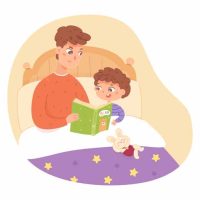
One evening, my son was struggling to settle down after a long, busy day. He was restless and tired, struggled to switch off, and threw tantrums. Not thinking twice, I picked up one of his favourite storybooks and began reading softly beside him. Gradually, he became calmer, started asking questions about the characters, and began predicting what might happen next. Watching him relax reassured me how bedtime stories for preschoolers can create comfort, connection, imagination, and a reassuring sense of security before sleep.
Why Should Indian Parents Make Stories Part of Bedtime?
For many families, bedtime is one of the few moments when parents and children have uninterrupted time together. Bedtime stories for preschoolers create a predictable ritual that can help children slow down and feel secure. The benefits extend beyond relaxation. Storytelling gives preschoolers opportunities to hear new vocabulary, follow sequences, understand characters, ask questions, and express ideas.
Kangaroo Kids describes storytelling as a valuable learning experience supporting vocabulary, comprehension, creativity, empathy, memory, and communication. Its approach also encourages children to participate actively rather than simply receive information.
How Can You Choose Bedtime Stories for Preschoolers?
Choose stories that match your child’s age, attention span, interests, and emotional readiness. A preschooler may enjoy animals, friendship, family adventures, festivals, nature, vehicles, or imaginative journeys. The best bedtime stories for preschoolers do not need complicated plots. A simple beginning, an interesting problem, and a reassuring ending can be enough.
Should You Choose Short Stories Before Sleep?
Shorter stories often fit more easily into a consistent routine. Some evenings may allow a longer picture book, while busy nights may call for 1-minute bedtime stories or short night stories. Parents looking for free bedtime stories to read online can find many digital options, but preview them before sharing. Check whether the language is age-appropriate and whether the ending feels suitable for bedtime.
What Can Children Learn From Bedtime Stories?
A story naturally introduces language. Children hear sentence patterns, descriptive words, dialogue, repetition, and expressions they may not encounter in everyday conversation. When you pause and ask, “What do you think will happen next?” children practise prediction and reasoning.
Stories can also help children explore emotions. A character may feel nervous about entering a new place, disappointed after losing a game, or happy after helping a friend. Discussing these situations gives children a safe way to think about feelings without making the conversation feel like a lesson.
Kangaroo Kids highlights storytelling as a way to support emotional understanding, empathy, communication, imagination, and creativity.
How Can Stories Encourage Imagination?
Unlike a screen, a spoken or read story does not show children every detail. They have to picture the setting, characters, sounds, colours, and actions themselves. You might read about a little bird flying over a busy city and ask your child what the city looked like in their imagination.
Which Types of Stories Work Well at Bedtime?
Families can add variety by keeping several kinds of stories on hand. Gentle animal stories, family adventures, nature tales, humorous stories, poems, folktales, and simple fairy tales can all work well. Fairy tales and bedtime stories can spark imagination and encourage moral choices, while familiar, repetitive stories can help children participate confidently.
Some parents may search for the goodnight moon bedtime story, while others may explore websites offering storyberries bedtime stories or similar digital collections. Reading together remains important because shared interaction is part of the experience.
Are Bedtime Stories Only for Older Preschoolers?
No. Very young children can benefit from stories too. Bedtime stories for newborns are usually simple, repetitive, and soothing, with attention to rhythm, sound, facial expressions, and the parent’s voice. As children grow, stories can gradually become longer and more complex.
How Can Indian Parents Build a Calm Reading Routine?
Choose a consistent time and create a comfortable environment. Dim lighting, a favourite blanket, or a quiet corner can signal that the day is winding down. Keep screens away during reading when possible, and let your child choose between two or three suitable books.
Do not worry if your child repeatedly chooses the same story. You can pause before a familiar sentence and allow your child to complete it.
Kangaroo Kids encourages learning through storytelling, creative experiences, role-play, exploration, and child participation. Its preschool programmes emphasise language development and give children opportunities to think, ask questions, create, discover, and practise through meaningful experiences.
How Can You Make Reading Interactive Without Making Bedtime Exciting?
Keep questions gentle and occasional. Instead of turning the story into a quiz, follow your child’s curiosity. If a character is hiding, ask what your child thinks is happening. If an animal feels sad, ask how they might help. If the story ends, invite your child to choose a favourite part.
Read More: Tales Bliss: Bedtime Stories for Kids for Magical Nights
FAQs
What is the best age to start preschool?
According to Kangaroo Kids, the best age to begin Playgroup is 2 years, while Nursery is recommended from 3 years. The programme then progresses to Junior KG at 4 and Senior KG at 5.
What does storytelling support in early learning?
Kangaroo Kids explains that storytelling can support language, creativity, empathy, communication, memory, comprehension, and imagination. Its approach encourages children to engage actively with stories through questions, participation, and exploration.
Last Thoughts
The best bedtime stories for preschoolers are not necessarily the longest, most elaborate, or most educational. They are stories that help children feel connected, curious, calm, and ready to rest. Whether you read a traditional Indian tale, a picture book from another culture, or a story you create together, the shared moment matters. A few quiet minutes with bedtime stories for preschoolers each night can strengthen language, imagination, emotional understanding, and the parent-child bond.
For parents looking for a preschool environment that thoughtfully encourages storytelling, imagination, communication, and playful learning, exploring the admission process at Kangaroo Kids Preschool can offer useful insight into how role-play, creative exploration, and child-centred experiences can turn everyday stories into meaningful opportunities for learning and growth.