When I started thinking about what makes a preschool the right choice for a child, I realised that the answer often becomes clear only after you step inside the school. A website or brochure can only say so much. A visit shows you how the classrooms feel, how teachers speak to children, and how children spend their day.
For Indian families, practical considerations such as travel time, fees, safety, curriculum, teaching style, teacher interaction, and the child’s comfort all matter. This checklist covers what to observe and what to ask during a preschool visit, so the decision feels more reassuring.
Before You Visit
A convenient location is useful, but the best choice should also reflect your child’s personality, developmental needs, interests, and your family’s expectations. If you are searching for a preschool near me, consider how long your child will spend travelling each day, then create a shortlist of three or four schools.
Do not stop at the search results. A school that appears impressive online may feel very different when you see its classrooms, meet educators, and observe how children interact. Compare their learning approach, classroom environment, teacher interaction, safety practices, daily schedule, facilities, and parent communication.
Look at the Classroom Through Your Child’s Eyes
When you walk in, look at the classroom the way your child would. Is it welcoming? Are materials accessible? Do children have opportunities to move, explore, talk, create, and play?
Notice whether the environment feels overly formal or encourages curiosity.
Observe the Teachers
Teachers are one of the most important factors in early childhood education. Notice whether educators listen patiently, encourage questions, acknowledge children’s feelings, and let them try tasks independently.
Ask how teachers respond when children make mistakes or need extra support.
Check Physical and Emotional Safety
Safety should be a non-negotiable consideration when evaluating the best preschools. Ask about secure entry and exit procedures, supervision, emergency preparedness, hygiene, classroom safety, and how the school handles illness or accidents.
Emotional safety matters too. Children should feel comfortable asking for help, expressing feelings, and forming relationships with teachers and classmates. A safe preschool supports both physical wellbeing and emotional confidence.
Ask About the Curriculum
A good preschool curriculum should support the whole child, not just academic preparation. Ask whether children learn through play, stories, music, movement, art, exploration, conversations, and hands-on experiences.
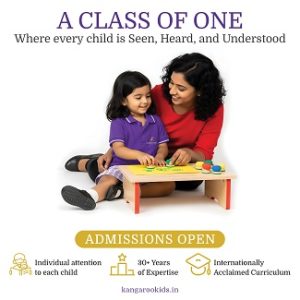
Kangaroo Kids describes its approach as child-centred and experiential, with opportunities for children to explore, create, discover, experiment, role-play, and communicate. Its preschool programmes include Playgroup, Nursery, Junior KG, and Senior KG, with learning experiences designed around children’s developmental stages.
Also ask how the preschool prepares children for the next stage of education. Look for a balance between structured routines and opportunities for choice, creativity, and independent thinking.
Questions to Ask the Staff
- What are the teachers’ qualifications, training, and experience?
- Is there ongoing professional development?
- What is the adult-to-child ratio, and how does the school ensure each child gets attention?
- How often do parents receive updates, and how are concerns about a child’s development discussed?
Instead of asking only, “What subjects do you teach?”, ask, “What does a typical day look like?” This can reveal whether children spend their time exploring and interacting or mainly completing structured tasks.
Understand the Fees and Timings
Fees matter, especially for families planning several years of preschool education. However, compare what is included rather than looking only at the headline amount.
Ask about admission fees, tuition, materials, meals, transportation, activities, uniforms, and other charges. Also consider the daily schedule and whether it works with your family’s routine.
Watch Your Child’s Response
Your child’s response during a school visit can provide useful information. Some children become excited immediately, while others need time to observe quietly. Neither reaction automatically determines whether a preschool is suitable.
Give your child opportunities to explore the environment. Watch whether they gradually become curious, engage with materials, approach teachers, or interact with other children.
Remember, the right preschool isn’t necessarily the one with the most impressive facilities.
Read More: What a Day at Kangaroo Kids Actually Looks Like
Quick Visit Checklist
Before you leave, ask yourself:
- Did the teachers listen to and engage with the children?
- Did the classroom feel welcoming and safe?
- Were my questions about safety, fees and daily routine answered clearly?
- Did my child show curiosity or comfort?
About Kangaroo Kids
Kangaroo Kids offers Playgroup for children aged 2 to 3, Nursery for ages 3 to 4, Junior KG for ages 4 to 5, and Senior KG for ages 5 to 6.
Kangaroo Kids uses its iCan Learning System and Fluidic Learning Methodology to support child-centred learning through exploration, creativity, communication and play-based experiences.
Final Thoughts
Finding a preschool is easy. Finding the right preschool requires more thoughtful research. A visit is where that research becomes real, so look closely at safety, teachers, curriculum, learning experiences, communication, costs, and your child’s comfort.
When families visit shortlisted schools and ask the right questions, they can make a more informed decision. The goal is an environment where children can develop confidence, curiosity, communication, independence, and a genuine enjoyment of learning.
If you are looking for a preschool that combines creativity, communication, imaginative learning, and thoughtful structure, exploring the admission process at Kangaroo Kids Preschool can provide useful insight into how role-play, storytelling, and play-based experiences become meaningful learning opportunities for young children.