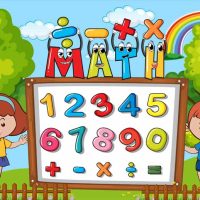
Learning numbers doesn’t have to start with worksheets filled with repeated sums. For a young child, numbers become meaningful when connected to play, stories, pictures, movement, and familiar experiences. This is why parents often look for engaging resources such as preschool math printables that can turn early mathematical ideas into enjoyable activities.
Making Numbers More Meaningful
Young children encounter numbers throughout their day. They count toys, compare fruits, notice shapes, arrange objects, and recognise patterns. Printable activities can build on these experiences by giving children opportunities to practise counting, matching, sorting, and identifying numbers.
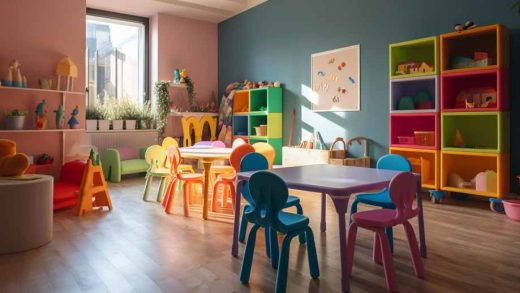
At Kangaroo Kids, we approach mathematics through exploration, real-world connections, play, and child-led discovery rather than memorisation. Children are encouraged to understand what numbers mean and how mathematical ideas relate to the world around them.
Well-designed preschool math printables can support this approach at home. A counting page can ask children to count apples and match them with the correct numeral. This makes numbers feel concrete.
Turning Practice Into Play
Children learn best when actively involved. A printable does not need to feel like formal schoolwork. Parents can add toys, blocks, crayons, or household objects.
For example, a page may show groups of objects and ask a child to circle the group with more items. Parents can then continue with toys, asking the child to compare and count.
This makes preschool math printables a starting point, not the whole learning experience. These preschool math printables introduce an idea, while conversation and hands-on play help the child understand it.
Supporting Different Mathematical Skills
Early mathematics includes much more than counting. Children gradually develop an understanding of quantity, shapes, patterns, sorting, comparison, measurement, and spatial relationships.
Parents can choose preschool activities for preschool children that focus on one concept at a time. A shape activity might ask children to identify circles, squares, and triangles. A pattern activity might show red-blue-red-blue and ask what comes next. Adults pursuing early childhood educator courses or early childhood teacher courses can also explore how such experiences support foundational mathematical thinking.
Simple preschool math pages can also introduce matching and sorting. Children might sort pictures according to colour, size, or shape. These activities encourage children to observe details and recognise relationships.
Connecting Printables With Real Life
Early learning is stronger when children connect an idea on paper with something they experience daily. After counting, children can count spoons while setting the table. After a shape activity, they can look around the home for circles, rectangles, or triangles.
This real-world connection reflects the way Kangaroo Kids approaches mathematics. Its mathematics programme uses the E-L-P-S approach: Experience, Language, Picture, and Symbol. Children first encounter concepts through experience, develop language around them, represent them visually, and connect them with mathematical symbols.
Making Activities Age Appropriate
The best printable is not necessarily the most colourful or complicated. Activities should match a child’s developmental stage and attention span. Too many instructions can become frustrating, while a simple activity can encourage concentration and confidence.
Parents can begin with familiar objects and small quantities, then gradually introduce patterns, comparisons, sequencing, and simple addition or subtraction concepts.
At Kangaroo Kids, learning experiences are designed around children’s developmental needs and encourage them to think, question, create, discover, and experiment. Printable activities work best when they follow the same principle of gradual challenge.
Encouraging Conversation
A printable becomes more valuable when adults talk with children while they work. Instead of asking only, “What is the answer?” parents can ask, “How did you know?”, “Can you find another one?”, “What happens if we add one more?”, or “Which group has fewer?”
These questions encourage children to explain their thinking and help adults understand whether a concept is understood or guessed.
Teachers at Kangaroo Kids similarly use conversations and open-ended questions to support mathematical thinking. Learning numbers should involve communication, not just practice.
Using Printables Creatively
There are many ways to make preschool math printables more engaging. Children can colour the objects they count, use stickers to mark answers, trace numerals with crayons, or place small toys on corresponding pictures.
Parents can also turn a worksheet into a movement activity. If a page asks children to count five objects, they can then do five jumps, claps, or steps. This brings mathematics into physical play and gives children another way to experience quantity.
Choosing Quality Over Quantity
Parents do not need a large collection of worksheets. A few purposeful activities can be more useful than repetitive practice. Look for clear instructions, age-appropriate concepts, opportunities to think, and activities that can be extended into hands-on experiences.
Also, avoid making every printable a test. Encouragement and opportunities to make mistakes help children develop confidence and curiosity.
Read More: Numeracy Through Play: How Kids Naturally Grasp Math
The Role of Printables in Early Learning
Preschool math printables can be useful tools when they are part of a wider learning experience. They can reinforce concepts introduced through play, provide practice, and help children recognise numbers and mathematical symbols.
However, they should complement, not replace, conversations, physical play, exploration, stories, puzzles, blocks, and real-world experiences. Mathematics becomes richer when children can see, touch, move, compare, question, and explain.
At Kangaroo Kids, mathematics is integrated with experiential, play-based learning so children can build confidence while making meaningful connections. The goal is to help children become curious thinkers who use mathematical ideas in everyday situations.
Last Thoughts
Used thoughtfully, preschool math printables can make number learning enjoyable, visual, and purposeful. When parents combine printable activities with toys, movement, stories, questions, and everyday counting, children begin to see mathematics as something they can explore rather than something they simply have to memorise.
For parents who want to encourage creativity, communication, and imaginative learning in a structured environment, exploring the admission process at Kangaroo Kids Preschool can offer valuable insights into how play-based experiences, exploration, and hands-on learning become meaningful learning opportunities for young children.