If your preschooler says the toy is “there” but cannot explain whether it is under the table, beside the chair, or behind the cushion, you are seeing a normal part of early mathematical language. Positional words help children describe where people and objects are in relation to one another. For Indian parents, these concepts can appear in everyday moments, from finding a lunchbox inside a school bag to placing shoes under a bench. An early childhood educator can turn these ordinary experiences into playful learning opportunities that strengthen spatial awareness, communication, reasoning, and confidence.
Why Positional Words Matter in the Preschool Years
Words such as above, below, inside, outside, near, far, in front of, behind, beside, between, and next to help children make sense of space. They are also connected to early mathematics because children learn to notice relationships, compare positions, follow directions, and describe what they observe.
At Kangaroo Kids, early mathematics is approached through experience, language, pictures, and symbols, connecting mathematical ideas with real-world situations. This approach reflects an important principle: young children understand concepts more deeply when they experience them rather than simply memorising definitions.
How Can Indian Parents Recognise Positional Learning?
Start With Familiar Objects
You do not need expensive resources. Ask your child to put a spoon inside a bowl, a toy beside a book, or a ball under a chair. Then reverse the instruction and ask the child to tell you where the object is.
At home, everyday Indian routines provide plenty of opportunities. A child can place a plate on the table, identify the pressure cooker beside the stove, or find a toy behind the sofa. These moments make preschool activities meaningful because the language has an immediate purpose.
An early childhood educator can use the same strategy in class by starting with objects children already know.
How Can Teachers Turn Movement Into Learning?
Let Children Become the Objects
Movement makes positional words easier to understand. Ask children to stand behind a friend, move between two cones, sit beside a teacher, or crawl under a table. Give one instruction at a time, then gradually combine two or three directions.
A simple classroom game might involve a teacher saying, “Stand next to the red block,” followed by “Move behind it.” Children hear the word, act on it, and physically experience the relationship.
This active approach supports the Kangaroo Kids emphasis on experiential learning. An early childhood educator can observe who understands the concept, who needs another demonstration, and who can explain the relationship independently.
Can Stories Teach Positional Words?
Turn Language Into a Story
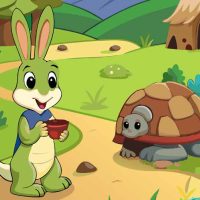
Storytelling can make spatial vocabulary memorable. Imagine a little rabbit looking for its carrot. The carrot is under the basket, then beside the tree, and finally inside a box.
Pause at each stage and ask children where the carrot is. Invite them to use complete phrases rather than pointing alone.
An early childhood educator can also use puppets, toy animals, blocks, and picture cards. Children can describe where the character is sitting or where an object has moved.
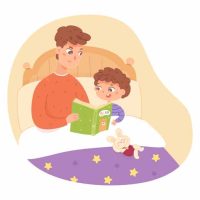
Parents can repeat this at bedtime using a favourite picture book. Ask, “Where is the cat?” or “What is behind the door?” This connects language development with shared reading.
How Can Teachers Build Positional Language Into Daily Routines?
Make Transitions Count
Transitions are excellent opportunities for repetition. Ask children to stand behind a line, walk between two groups, place bags inside cubbies, or sit beside a partner.
An early childhood educator can deliberately repeat the same words across several days. Repetition helps children hear vocabulary in different situations without making learning feel repetitive.
During snack time, children can identify what is on their plate, beside their cup, and inside their lunchbox. During outdoor play, they can describe who is in front of or behind them.
How Can Parents Support What Happens at Preschool?
Ask Better Questions at Home
Instead of asking only, “What did you learn today?”, ask questions that encourage spatial language. Try, “Where did you keep your shoes?” “What was beside your friend?” or “Where was the ball during your game?”
If your child gives a vague answer, model the phrase naturally. If they say, “The car is there,” you might respond, “Yes, the car is under the chair.”
This gentle modelling helps children expand their vocabulary without turning family time into a test.
What Should Teachers Avoid?
Do Not Rush Toward Correct Answers
Young children may confuse above and below or behind and in front of. That does not mean they are failing. Give them opportunities to move, observe, try again, and explain their thinking.
An early childhood educator should avoid turning every mistake into a correction. Instead, demonstrate the relationship and invite another attempt.
The goal is not simply for children to recite positional words. It is to help them understand relationships and use language confidently.
How Does This Approach Support School Readiness?
Positional vocabulary supports more than mathematics. Children use spatial language when following classroom instructions, describing pictures, participating in physical games, organising materials, and communicating with peers.
The Kangaroo Kids curriculum describes learning stations and hands-on experiences that encourage children to think, ask questions, and build their own learning. Such environments give an early childhood educator opportunities to observe learning as it happens and adapt activities accordingly.
Strong spatial awareness can also support later work with shapes, patterns, measurement, writing, reading directions, and problem-solving.
Read More: Fun + Learning: Positional Language Activities for Your Kids
Last Thoughts
Teaching positional words does not require complicated lessons. The most effective experiences can happen through movement, stories, classroom routines, familiar objects, and thoughtful questions. When adults consistently connect words with real experiences, preschoolers gradually learn to understand and communicate spatial relationships.
For parents interested in an environment where creativity, communication, curiosity, and meaningful learning are woven into everyday experiences, exploring the admission process at Kangaroo Kids can offer useful insight into how play, storytelling, exploration, and hands-on activities can help preschoolers build strong foundations for future learning.