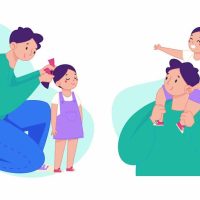
Have you ever had those days that just zoom by with all the chores, messages buzzing around, and school drop-offs to juggle? Taking some time to play with kids might feel like a nice-to-have in our busy lives. Nothing brightens a tiring day more than playing with kids and hearing their laughter fill the room. The real magic happens in those light-hearted moments when joy, growth, and connection just come alive.
1. Play Is About So Much More Than Fun
When you’re really hanging out with kids, you’re not just killing time; you’re helping them grow emotionally, pick up language skills, and think creatively. Our living rooms transform into little adventure spots, where kids learn self-regulation, communication, and emotional awareness while enjoying themselves.
Research confirms that play builds essential skills like emotional intelligence, resilience, and social understanding—skills that stay with children long after the fun ends. And let’s face it, these are not things you can teach with a lecture; they’re absorbed through laughter, curiosity, and connection. The learning feels effortless, almost invisible, but it shapes who they become.
2. The Subtle Magic of Kids Playing with Toys
Kids playing with toys is such a delightful sight. Whenever a child builds, stacks, or creates a story with their toys, they’re enhancing their motor skills, expanding their imagination, and grasping basic cause-and-effect concepts. A toppled block tower, accompanied by laughter and the excitement of another rebuild, is learning in action wrapped in fun. These acts of creation and playful exploration are foundational to holistic growth.
There’s also a quiet independence in toy play. A doll becomes a friend, a toy car becomes a rocket—it’s your child learning how to create worlds, solve problems, and find joy on their own. These moments help children process their feelings and experiences in ways words sometimes can’t capture.
3. When You Play with Them, Everything Deepens
The beauty isn’t just in solo play; it’s when you, as a parent or caregiver, step into the scene. Johns Hopkins Medicine underscores that when parents actively play with their children, it strengthens emotional resilience, social bonds, and stress coping abilities.
It makes you more than a parent. You become a team captain, a co-adventurer—someone who laughs with them, supports them, and enriches their world. And here’s the bonus: children who feel their parents truly “enter” their world of play often open up more freely, sharing little stories, fears, and dreams that may not emerge in a structured conversation.
4. Games to play at home with kids
Here are some simple games you can play with your kids at home that turn any space into a fun playground:
Dress-Up Story-time: Use scarves, capes, and hats—imagine characters and scenarios, get silly, get creative. It’s not just fun, it’s role-playing that helps kids experiment with identity and confidence.
Living Room Obstacle Course: Pillows for stepping stones, chairs for tunnels—cheers and collective high-fives included. Even five minutes of this burns energy and leaves everyone smiling.
Toy Storytelling: Line up action figures or dolls and co-create a short story—let your child drive the narrative. You’ll be surprised at the imagination they pour into it.
Memory Game with a Twist: Pair cards, then add a clap or dance move as each pair is matched—fun and memory boost in one. Its learning disguised as laughter.
Emotion-Based “Simon Says”: “Simon says show me excitement”—cue expressive grins and giggles. It teaches empathy by helping kids recognise and act out emotions.
Those are some games to play at home with kids. These activities invite kids to play with toys, push creativity, and give you moments that stick. And perhaps the best part? You don’t need fancy equipment; just presence and willingness to be silly.
5. Adding Indian Flavour to Everyday Play
Let’s root it in familiar magic. Ever notice how kids sprint around with bursts of energy after a warm idli-sambar breakfast? That’s the perfect energy for a quick fun game—maybe a “spoon race” in the veranda. Or, post-monsoon, splashing imaginary puddles indoors with towels—chaotic, hilarious, and delightfully memorable.
Think of grandparents joining in too—teaching “lagori” or narrating tales while the kids act them out. These culturally grounded playtimes carry a double benefit: children bond with heritage while laughing their hearts out. It’s everyday India, full of charm and love.
6. Why Play Matters—Backed by Credibility
The foundation for future thinkers, innovators, and compassionate people is laid by unstructured, imaginative play in which kids take charge and design their own little experiences. This is not merely a personal opinion; it is supported by evidence and accepted globally.
In India, play also opens doors for dialogue—reflecting traditions passed through stories, costume dramas inspired by grandparents, or spontaneous “teachings” during shared games. This intergenerational play fosters emotional safety, cultural rootedness, and identity growth. It’s the kind of growth no gadget or screen can replicate.
7. Real-World Evidence: The Power of Play in Family Life
Experts and recent stories reaffirm that shared play isn’t a luxury but a daily need. A recent Times of India wellness piece highlights how dedicating just 60 minutes of play a day beats screen time—and builds emotional bonds, creativity, and academic readiness.
And even amid time constraints, small, presence-filled moments—like bedtime reading or playful breakfast banter—have profound effects on emotional intelligence. As specialists say, these child-led, in-the-moment interactions help children regulate emotions and build perspective-taking skills. Every “let’s play for 10 minutes” matters—it compounds over childhood like tiny deposits of trust.
8. A Hidden Benefit—Parents Recharge Too
Here’s something often overlooked: play rejuvenates parents as well. That silly round of “Simon Says” after a long workday often feels more healing than scrolling through your phone. In joining their games, you step out of the grind, even briefly, and rediscover your own inner child. It’s therapy in the form of giggles.
When you play, you’re offering children the world through presence, laughter, and imagination—not adding to your parental burden. Children gain empathy, resiliency, creativity, and a connection that cannot be formed by words alone via play. For families, play is life, condensed into happiness, not a “break from life”.
Even ten minutes of playing with kids can turn an ordinary evening into a memory that lasts a lifetime.
If you are looking for a preschool that truly values the importance of play, Kangaroo Kids International Preschool is an excellent option. Every child is encouraged to develop their curiosity and self-confidence via their imaginative and creative approach to learning. All aspects of a child’s development benefit from unrestricted time for play, exploration, and socialisation.