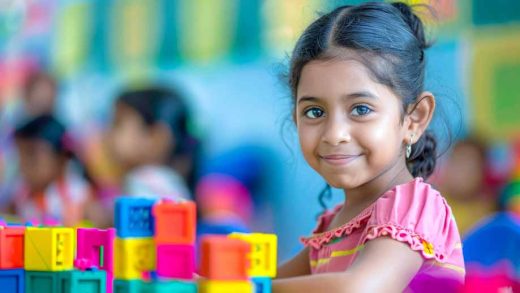
A close friend of mine recently moved to a new city with her husband and toddler son. The excitement of a fresh start quickly turned into anxiety when it was time to look for a preschool. Neither of them knew the area well. Every preschool website looked impressive. Every brochure promised “holistic development,” “international curriculum,” and “child-centred learning.” Yet the more schools they visited, the more confused they became.
One school had beautiful infrastructure, but felt emotionally cold. Another focused heavily on academics, even for toddlers. One preschool looked colourful and modern, but the teachers barely interacted warmly with the children during the visit. My friend eventually admitted something many parents secretly feel: choosing a preschool can be overwhelming, especially when parents are unsure what questions actually matter.
Today, preschool education has become far more complex than simply finding a nearby school with good facilities. Research increasingly shows that early childhood experiences strongly influence emotional development, communication skills, confidence, social behaviour, and future attitudes toward learning. According to Harvard University’s Center on the Developing Child, early experiences shape the architecture of the developing brain and influence long-term cognitive and emotional outcomes.
This is why understanding how to choose a preschool is one of the most important decisions parents make during early childhood. Yet many families focus only on infrastructure, fees, or curriculum labels while overlooking deeper questions that truly affect a child’s daily experience and development.
Why Choosing the Right Preschool Matters More Than Parents Realise
The preschool years are not only about preparing children academically.
During early childhood, children are developing:
- Emotional security
- Social confidence
- Communication skills
- Curiosity
- Creativity
- Problem-solving abilities
Research published by the National Scientific Council on the Developing Child highlights that emotionally responsive early learning environments significantly influence healthy development.
This is why choosing the right preschool involves far more than academics alone.
Question 1: How Does the School Make Children Feel Emotionally Safe?
One of the most overlooked questions in how to choose a preschool is emotional safety.
Ask yourself:
- Do teachers speak calmly and respectfully?
- Are children encouraged gently?
- Do teachers comfort upset children patiently?
- Does the environment feel emotionally warm?
Young children learn best when they feel emotionally secure.
Research from the American Academy of Pediatrics emphasises that emotionally supportive early learning environments improve social, emotional, and cognitive outcomes.
A positive emotional atmosphere matters just as much as academics.
Question 2: Is the Preschool Classroom Environment Calm, Engaging, and Child-Friendly?
The preschool classroom environment strongly affects how children experience learning daily.
Observe:
- Noise levels
- Cleanliness
- Child accessibility
- Lighting and ventilation
- Space for movement and play
A good classroom should feel:
- Safe
- Welcoming
- Organised
- Emotionally comfortable
Children should look engaged rather than fearful or overly controlled.
This is an important part of understanding how to choose a preschool thoughtfully.
Question 3: Does the School Encourage Play-Based Learning in Preschool?
Many modern educators strongly support play-based learning in preschool because research consistently shows that young children learn best through active exploration and interaction.
Ask:
- Are children encouraged to explore freely?
- Is storytelling used regularly?
- Are dramatic play and creative activities included?
- Do children learn through hands-on experiences?
According to UNICEF and multiple early childhood development studies, play-based learning supports:
- Language development
- Emotional regulation
- Creativity
- Social skills
- Problem-solving abilities
Preschool should not feel like formal primary school too early.
Question 4: What Is Included in the Preschool Safety Checklist?
Safety should go far beyond CCTV cameras and locked gates.
A thoughtful preschool safety checklist includes:
- Child supervision practices
- Hygiene routines
- Emergency preparedness
- Safe play equipment
- Teacher-child ratios
- Visitor management systems
Parents should also observe:
- Whether teachers actively supervise children
- How conflicts are handled
- Whether children appear emotionally comfortable
Physical and emotional safety are equally important.
Question 5: How Do Teachers Communicate With Parents?
One important but often overlooked aspect of choosing a preschool is parent-school communication.
Ask:
- How often are parents updated?
- Are concerns discussed openly?
- Do teachers share developmental observations?
- Is communication respectful and collaborative?
Healthy communication helps parents feel emotionally secure and involved in the child’s growth.
Strong parent-teacher partnerships often improve children’s adjustment and emotional confidence.
Question 6: Are Children Encouraged to Be Independent?
Many parents focus heavily on academics while overlooking the development of independence.
Ask:
- Are children encouraged to solve simple problems?
- Do children help with clean-up activities?
- Are self-help skills encouraged?
- Do teachers allow children to try independently?
Preschool should help children build:
- Confidence
- Responsibility
- Emotional resilience
- Problem-solving abilities
This developmental focus is a major part of choosing the right preschool.
Question 7: Do the Children Actually Look Happy?
This may sound simple, but it is one of the most important questions to ask a preschool.
Observe carefully:
- Are children smiling naturally?
- Do they interact comfortably with teachers?
- Are they curious and engaged?
- Do teachers respond warmly?
Children’s behaviour often reveals more than brochures or marketing material ever can.
A school may have excellent infrastructure, but emotional warmth matters deeply during early childhood.
Read More: Parental tips to prepare your child for the Preschool Phase
Why Many Parents Focus on the Wrong Things
Modern preschool marketing often emphasises:
- Fancy classrooms
- Technology
- International labels
- Academic acceleration
While infrastructure matters, research increasingly shows that emotional interaction and responsive teaching strongly influence early development.
Understanding how to choose a preschool requires looking beyond appearances.
What Research Says About Early Childhood Learning Environments
Research from Harvard University’s Center on the Developing Child shows that supportive relationships and emotionally responsive environments strongly influence healthy brain development.
Similarly, the National Association for the Education of Young Children (NAEYC) highlights that high-quality preschool environments should prioritise:
- Play-based learning
- Responsive teaching
- Emotional safety
- Social interaction
- Child-centered exploration
These findings reinforce the importance of thoughtful preschool selection.
Why Indian Parents Often Feel Pressured
In many Indian cities, preschool admissions have become highly competitive.
Parents often feel pressure to prioritise:
- Academic preparation
- Reputation
- Future school admissions
- Structured learning
However, early childhood experts increasingly caution against excessive academic pressure during preschool years.
Children need:
- Emotional security
- Creativity
- Social learning
- Exploration
- Communication opportunities
These developmental foundations strongly influence long-term learning success.
Why a Preschool Checklist for Parents Matters
Creating a thoughtful preschool checklist for parents can help families stay focused during school visits.
Your checklist may include:
- Emotional atmosphere
- Teacher warmth
- Safety measures
- Communication style
- Learning philosophy
- Child engagement
- Opportunities for play and creativity
This helps parents make more balanced and informed decisions.
Questions to Ask a Preschool About Teacher Training
Many parents forget to ask about teacher preparation.
Important questions to ask a preschool include:
- How are teachers trained?
- Are teachers educated in child development?
- How does the school support emotional learning?
- How are behavioural challenges handled?
Teachers strongly influence children’s emotional and social experiences during early childhood.
Why Play Matters More Than Parents Think
Many parents still associate learning mainly with:
- Worksheets
- Memorisation
- Structured instruction
However, research increasingly supports play-based learning in preschool because children develop best through:
- Exploration
- Social interaction
- Creativity
- Imaginative play
- Emotional engagement
These experiences build both cognitive and emotional foundations for future learning.
Read More: Self-Help Skills for Preschoolers: A Parent’s Guide
Common Mistakes Parents Should Avoid
Choosing Only Based on Academics
Early emotional development matters just as much as academics.
Ignoring Teacher Behaviour
Teacher-child interaction strongly shapes preschool experiences.
Prioritising Branding Over Emotional Environment
A warm, responsive classroom matters deeply during early childhood.
Understanding these mistakes helps parents approach how to choose a preschool more thoughtfully.
Long-Term Benefits of Choosing the Right Preschool
Children who experience emotionally supportive preschool environments often:
- Build stronger confidence
- Adapt more comfortably to school
- Develop healthier communication skills
- Enjoy learning more naturally
These early experiences often influence long-term attitudes toward education and relationships.
Last Thoughts
My friend eventually realised that finding the “best” preschool was not about choosing the most expensive building or the most impressive brochure. It was about finding an environment where her child would feel emotionally safe, encouraged, curious, respected, and excited to learn.
Understanding how to choose a preschool requires parents to look beyond surface-level features and ask deeper questions about emotional support, play, communication, safety, teacher interaction, and child-centred learning. These factors shape not only a child’s early education, but also their confidence, social development, and relationship with learning itself.
For families seeking learning environments that nurture emotional confidence, creativity, communication, imaginative exploration, collaborative learning, and child-centred development from the earliest years, understanding the educational philosophy and classroom approach at Kangaroo Kids can provide meaningful insight into how storytelling, role play, play-based learning, emotionally supportive teaching, and experiential classroom practices are thoughtfully integrated into everyday preschool education.