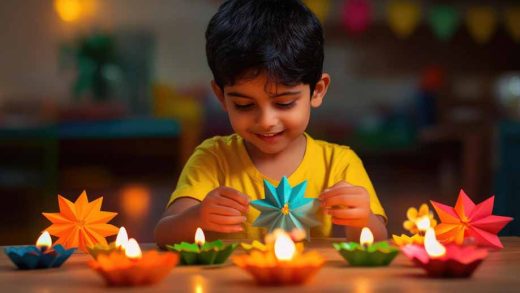
A colleague of mine often jokes that conversations in his home sound like an international conference. He is from Kerala, his wife is from West Bengal, and the family lives in Mumbai. At home, he speaks Malayalam with their four-year-old son, while his wife speaks Bengali. The child also hears and speaks Hindi regularly because of daily life in Mumbai, and English through books, cartoons, and preschool activities. Soon, he will begin learning Marathi in school as well.
When people first hear this, many immediately react with concern. “Won’t the child get confused?” they ask. Some assume that exposure to multiple languages at such a young age may delay speech or make communication difficult. However, spending time with this child completely changes that assumption. He effortlessly switches between words and expressions depending on whom he is speaking to. More importantly, he appears curious, expressive, socially confident, and deeply connected to different aspects of his family’s cultural identity.
Modern research strongly supports what families like this are already experiencing in everyday life. Children are naturally capable of processing multiple languages during the early years. In fact, multilingual exposure can significantly strengthen early childhood language development while also supporting memory, cognitive flexibility, communication skills, and cultural awareness.
In India, especially, where multilingual households are common, understanding the long-term benefits of helping children learn more than one language is becoming increasingly important.
Why Early Childhood Is the Best Time for Language Learning
The early years are among the most important phases of brain development.
During this period, children’s brains are highly adaptable and especially responsive to sounds, speech patterns, and communication cues. This is why early childhood language development happens so rapidly between birth and age six.
Young children naturally absorb:
- Vocabulary
- Pronunciation
- Grammar patterns
- Social communication cues
This ability makes early childhood an ideal time to learn more than one language naturally and comfortably.
Language Development in Children Happens Through Exposure
One of the biggest misunderstandings parents have is that formal teaching is the only way children learn language.
In reality, language development in children happens primarily through:
- Conversation
- Listening
- Observation
- Storytelling
- Daily interaction
Children learn language naturally when they are surrounded by meaningful communication experiences.
This is why multilingual homes often support stronger early childhood language development than parents realise.
Does Learning Multiple Languages Confuse Children?
This remains one of the most common concerns among parents.
However, research consistently shows that multilingual exposure does not confuse children. Instead, children gradually learn how different languages function in different contexts.
A child may:
- Speak one language with grandparents
- Another with parents
- Another at school
This flexibility becomes natural over time.
In fact, children who learn more than one language often develop stronger cognitive adaptability and communication awareness.
Bilingualism in Early Childhood and Brain Development
Studies on bilingualism in early childhood show that multilingual children often demonstrate stronger:
- Cognitive flexibility
- Problem-solving skills
- Attention control
- Memory processing
Switching between languages exercises the brain in unique ways that support overall cognitive growth.
This is one reason multilingual exposure benefits not only communication, but also broader early childhood language development and thinking abilities.
Emotional and Cultural Benefits of Multilingual Exposure
Language is deeply connected to identity, family, and emotional belonging.
Children who grow up hearing multiple languages often develop:
- Stronger cultural awareness
- Deeper family connections
- Greater empathy toward different communities
For example, the colleague’s child not only understands Malayalam and Bengali linguistically but also connects emotionally with songs, stories, traditions, and family relationships associated with those languages.
Helping children learn more than one language also helps preserve cultural heritage across generations.
Read More: Fun + Learning: Positional Language Activities for Your Kids
Early Childhood Language Development Through Everyday Interaction
Children do not need formal grammar lessons to absorb languages during early childhood.
Everyday Activities That Support Language Learning
- Storytelling
- Songs and rhymes
- Family conversations
- Playtime interaction
- Reading books aloud
These simple experiences naturally support early childhood language development.
Indian Context: Why Multilingualism Is Common
India is one of the most multilingual societies in the world.
Many children regularly grow up hearing:
- Regional languages
- Hindi
- English
- Community languages
A child in India may naturally navigate multiple linguistic environments through:
- Family interaction
- Neighbourhood communication
- School settings
- Media exposure
This makes multilingual exposure a normal and valuable part of language development in children across the country.
Why Multilingual Children Often Develop Strong Listening Skills
Children exposed to multiple languages learn to pay close attention to:
- Tone
- Context
- Pronunciation
- Social cues
This often strengthens listening abilities and communication awareness.
Strong listening skills also support emotional intelligence and social interaction.
Language and Cognitive Flexibility
Children who regularly switch between languages constantly practice mental flexibility.
This helps strengthen:
- Adaptability
- Memory organisation
- Attention control
- Problem-solving abilities
These benefits extend far beyond communication alone.
This is another reason multilingual exposure positively influences early childhood language development.
The Role of Schools in Supporting Multilingual Learning
Modern schools increasingly recognise the value of multilingual environments.
Quality preschool classrooms often support language development through:
- Storytelling
- Songs
- Group conversation
- Dramatic play
- Reading experiences
Children benefit most when schools create emotionally safe spaces where multiple languages are respected and encouraged.
Why Parents Should Not Force Perfection
One common mistake parents make is expecting children to speak every language perfectly from the start.
Young multilingual children may:
- Mix words temporarily
- Prefer one language in certain settings
- Develop vocabulary unevenly across languages
This is a natural part of multilingual learning.
Parents should focus more on communication confidence than perfection during early childhood language development.
Does Multilingual Exposure Delay Speech?
Research shows that multilingual exposure does not inherently cause speech delay.
Some multilingual children may initially divide vocabulary across languages, but their overall communication development remains healthy.
If concerns arise, speech development should be evaluated holistically rather than assuming multilingualism is the problem.
In most cases, children successfully learn more than one language without difficulty.
Storytelling and Multilingual Learning
Stories are one of the most powerful tools for language learning.
Benefits of Storytelling Include
- Vocabulary expansion
- Listening comprehension
- Emotional connection
- Cultural understanding
Parents can support language development in children by reading stories in multiple languages naturally and consistently.
Technology and Multilingual Exposure
Educational technology can support multilingual learning when used thoughtfully.
Useful tools include:
- Audiobooks
- Songs
- Interactive storytelling
- Language-rich educational content
However, direct human interaction remains far more important than passive screen exposure during early childhood language development.
Common Mistakes Parents Should Avoid
Switching to Only English Too Early
Many parents fear that regional languages may interfere with English learning.
In reality, multilingual children can successfully learn multiple languages simultaneously.
Correcting Every Small Mistake
Children need confidence and emotional comfort while experimenting with language.
Assuming Children Are “Confused”
Mixing languages temporarily is a normal developmental process.
Avoiding these misconceptions helps children benefit more fully from multilingual exposure.
Long-Term Advantages of Multilingualism
Children who grow up multilingual often:
- Adapt more easily to different environments
- Communicate more confidently
- Build stronger cultural awareness
- Develop flexible thinking skills
These benefits continue throughout adulthood.
Global Relevance of Multilingual Learning
In an increasingly interconnected world, multilingualism is becoming more valuable globally.
People who understand multiple languages often experience:
- Broader cultural understanding
- Greater communication opportunities
- Stronger adaptability in diverse environments
This makes early multilingual exposure valuable, both personally and professionally, over time.
Read More: 8 Common Practices for Fluency Development In Children
Last Thoughts
The colleague’s four-year-old son, who effortlessly navigates Malayalam, Bengali, Hindi, and English, is not confused or overwhelmed. He is simply growing within a rich linguistic environment that supports curiosity, communication, emotional connection, and cognitive flexibility.
Many parents still worry that helping children learn more than one language may interfere with development. Modern research, however, shows the opposite. Multilingual exposure often strengthens early childhood language development while also supporting broader emotional, social, and cognitive growth.
In multicultural societies like India, multilingualism is not an obstacle. It is an incredible developmental advantage that allows children to connect more deeply with people, cultures, and ideas throughout life.
For families seeking learning environments that nurture communication, creativity, emotional confidence, storytelling, and child-centred exploration from the earliest years, understanding the educational philosophy and admission approach at Kangaroo Kids can provide valuable insight into how language-rich experiences, collaborative learning, imaginative play, and emotionally supportive classroom environments are thoughtfully integrated into everyday preschool education.