There’s a small patch of ground behind our building. Not a park – just uneven soil with one crooked tree, two broken swings, and a pipe that leaks when it rains. My daughter calls it her “forest.” Every evening after school, she goes there with a spoon, a small bucket, and a mission I don’t understand.
One day she’s “cooking for worms”, another day she’s “building a pool for ants.” And honestly, I’ve stopped interrupting.
I used to worry about the mud, about the washing, about mosquitoes. Then one day, she told me, “Amma, soil smells different after rain because the earth is happy.” That sentence changed me.
Why dirt isn’t dirty
When I was growing up in Jamshedpur in the 90s, playtime often meant open plots, “puliyas” or half-constructed buildings. We didn’t have manicured gardens or indoor play areas really. We made toy cars out of matchboxes, and bracelets with random snail shells that we collected from the quarters.
Nobody called it learning. But looking back, that was our preschool nature play. It taught us how things feel, fall, break, and rebuild.
Now, kids have clean hands but restless minds. Parks are smaller, gadgets are faster. But the basics haven’t changed – children still learn best when their hands are busy and their minds are free. That’s what nature play for preschoolers is about.
When my daughter scoops wet soil and says, “Amma, this one’s heavier,” she’s learning texture, weight, and observation – without any flashcards.
The world outside the classroom
In a nature play preschool, the real teacher is the ground. You’ll find children collecting sticks, comparing leaves, and asking questions that don’t have fixed answers. That’s the beauty of it – no one corrects curiosity.
A friend who teaches at one such school told me about an activity where kids had to find “something alive that doesn’t move.” One child brought a seed, another brought soil, another said, “sunlight.” The discussion went on for twenty minutes. That’s what nature does – it slows learning down just enough to make it sink in.
Preschool nature play doesn’t need toys. It needs permission.
Small things, big lessons
We’ve tried a few nature play ideas for preschoolers at home. Some are now part of our weekends.
1. The balcony garden
We have three pots. Tulsi, ajwain, and marigold. She waters them daily, sometimes too much. Once, the tulsi drooped, and she said softly, “I think I loved it too hard.” That was empathy.
2. Shadow tracing
We draw her shadow with chalk in the morning, then again in the evening. “I got shorter, Amma!” she laughs. That’s early science.
3. Leaf letters
We collect fallen leaves and use them to make letters on the floor – ‘A’ with two long ones, ‘O’ with round ones. That’s literacy, nature’s way.
4. Ant observation
Watching ants move rice grains for ten minutes teaches focus better than any concentration app.
5. Rain day
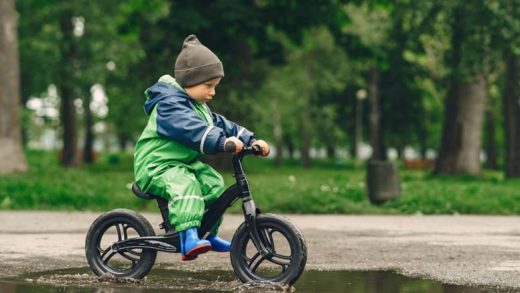
When it rains, we don’t hide. We go out. She jumps. I watch. That’s memory.
All these are simple nature play activities for preschoolers, but each gives something deeper – patience, wonder, calm.
What happens when they touch the earth & soil
A lot of parents worry about hygiene. I did too. But there’s real science behind this. Soil exposure boosts immunity. Uneven ground builds balance. Sunlight helps mood and sleep. You can see the difference.
When we started regular outdoor play, my daughter’s energy evened out. She became calmer. Less cranky. She started noticing things – “Amma, that tree has new leaves,” “the clouds look like laddoos.” These tiny observations told me her mind was slowing down in the best way.
Nature doesn’t rush. Children shouldn’t either. So, parents reading this – please LET your child play in soil and sand, get their hands dirty, messy – you can always sanitize it with a hand sanitizer immediately once they are done – but let them do it. It’s OK. It’s great!
A reminder from our own childhood
We didn’t have words like “sensory play” or “gross motor skills.” We just had evening light and open space. We got dirty, got hurt, and got stronger. Those scraped knees and muddy shirts taught more resilience than most textbooks.
That’s what I want for my daughter. To fall, laugh, and get up on her own. To see worms not as yuck but as part of something bigger. That’s what preschool nature play brings back – perspective.
Parents can start small
You don’t need a garden. Even a single pot is enough. Here’s what worked for us:
- Give children a spoon and a bowl and let them “cook” using soil and water.
- Keep a jar for “today’s finds” – stones, seeds, or twigs from walks.
- Watch the sky together. Point out shapes in clouds.
- Grow one plant. Name it. Take photos every week to see changes.
The point isn’t perfection. It’s connection. Nature doesn’t expect results. It just asks for attention. These nature play ideas for preschoolers help even in apartments – they open up the small window between structure and freedom.
When schools join in
A good nature play preschool we visited had one golden rule: “Don’t say yuck.” Children touched worms, smelled leaves, and learned that everything has its place. Lessons happened outside. Counting stones was math. Listening to bird calls was music. Painting with mud was art.
Teachers told me something that stuck – “If a child can describe a leaf in five words, they’ll never forget what learning feels like.” That sentence says it all.
Nature play for preschoolers is not an activity. It’s a mindset.
The small changes you notice
After a few weeks of regular outdoor play, I noticed my daughter’s questions changing. Instead of “Can I watch TV?” she started saying, “Can we go see if the red flower opened today?”
She began sleeping better. Eating better. Talking softer. Nature doesn’t just grow plants – it grows calm.
One day, she said, “Amma, the ants came back even after I blocked their path.” I smiled. “That’s how life works,” I said. “You find another way.”
The Kangaroo Kids way
At Kangaroo Kids International Preschool, we’ve seen how nature transforms learning. Children explore textures, sounds, colors, and shapes in safe, open spaces.
Each day includes simple, structured nature play activities for preschoolers – planting seeds, making shadow art, feeling the rain. If you are looking for a preschool for your little one, do consider Kangaroo Kids and see how it helps your child “slow down” in the right way.