A child’s first classroom is not a school: it is their home. Long before the introduction to formal education, children learn by observing, exploring, and interacting with their surroundings. Every conversation, every object, and every experience contributes to how their brain develops. For parents in India and across the world, the good news is that creating a rich learning environment does not require expensive toys or elaborate setups. Simple, intentional efforts can provide powerful cognitive development activities for preschoolers that shape a child’s thinking, memory, and problem-solving skills. This article explores how to build an environment at home that supports all-round cognitive growth using everyday resources.
Understanding Cognitive Development in Early Childhood
What Is Mental Development in a Child?
Cognitive development refers to how children think, learn, remember, and solve problems. It includes:
- Attention and focus
- Memory and recall
- Language and communication
- Logical reasoning
The mental development in children begins from infancy and grows rapidly during the preschool years. During this time, the brain forms connections based on experiences. This is why providing meaningful cognitive development activities for preschoolers is essential during early childhood.
Why the Home Environment Matters
Creating a Home-Learning Environment
A well-designed home-learning environment does not mean a separate study room or costly materials. It simply means a space where children feel encouraged to explore, ask questions, and engage with their surroundings.
Key elements include:
- Accessibility to everyday objects
- Opportunities for interaction
- A safe and supportive atmosphere
In Indian homes, where families often share spaces, learning naturally blends into daily life, through conversations, routines, and cultural practices. The right environment makes it easier to incorporate cognitive development activities for preschoolers seamlessly into everyday routines.
The Power of Everyday Learning
Learning Without Expensive Toys
Many parents believe that learning requires educational toys or digital tools. However, some of the best cognitive development activities for preschoolers use simple household items.
Examples include:
- Kitchen utensils for sorting and counting
- Clothes for folding and organising
- Books and newspapers for storytelling
These activities stimulate thinking and creativity without additional cost.
Brain-Stimulating Activities for Toddlers
Simple Activities That Boost Thinking
Effective brain-stimulating activities for toddlers focus on exploration and interaction rather than instruction.
1. Sorting and Classifying
Give children items like buttons, dal, or blocks to sort by:
- Color
- Size
- Shape
This builds logical thinking and categorisation skills.
2. Matching Games
Ask children to match:
- Socks
- Lids for containers
- Similar objects
This enhances memory and attention.
3. Everyday Problem-Solving
Encourage children to:
- Find missing objects
- Solve simple puzzles
- Arrange items in order
These are practical cognitive development activities for preschoolers that build reasoning skills.
Language and Communication Development
Talking Builds the Brain
Language is a key part of cognitive growth. The more children hear and use language, the stronger their communication skills become.
Activities to Try:
- Narrate daily activities
- Ask open-ended questions
- Encourage storytelling
For example:
- “What do you think will happen next?”
- “Why do you like this toy?”
These interactions are powerful cognitive development activities for preschoolers that enhance thinking and expression.
Encouraging Curiosity Through Play
Free Play and Exploration
Unstructured play allows children to:
- Experiment with ideas
- Explore cause and effect
- Develop creativity
Children do not need complex toys. Simple items like:
- Cardboard boxes
- Clay
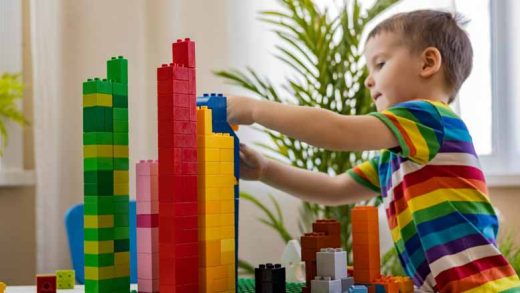
- Building blocks
All this can provide endless opportunities for learning. Such play-based experiences are essential for preschoolers’ cognitive development.
Building Memory and Attention Skills
Activities That Strengthen Focus
Memory and attention are crucial for learning.
Try These Activities:
- Recall games (“What did we see at the park?”)
- Simple sequences (“Clap, jump, clap”)
- Story repetition
These exercises improve concentration and retention. Incorporating these into daily routines ensures consistent cognitive development activities for preschoolers.
Using Daily Routines as Learning Opportunities
Learning Through Household Tasks
Daily chores can become valuable learning experiences.
Examples:
- Counting fruits while shopping
- Measuring ingredients while cooking
- Arranging items during cleaning
These activities teach:
- Numbers and quantities
- Organization skills
- Responsibility
They also serve as practical cognitive development activities for preschoolers.
Cultural Learning in Indian Homes
Learning Through Traditions
Indian households offer rich opportunities for cognitive stimulation through cultural practices.
Examples include:
- Storytelling from epics
- Festival preparations
- Singing rhymes and bhajans
These activities enhance memory, language, and understanding. They also contribute to the mental development of a child by connecting learning with culture and values.
Creating a Stimulating Yet Calm Environment
Balance Is Key
While stimulation is important, overstimulation can be overwhelming. A good home-learning environment should:
- Avoid excessive noise and distractions
- Provide structured routines
- Allow time for rest and reflection
Children learn best when they feel calm and secure.
The Role of Parents and Caregivers
Be an Active Participant
Parents do not need to be experts, they just need to be involved.
Simple actions like:
- Playing together
- Listening attentively
- Encouraging questions
- …make a significant difference.
The effectiveness of cognitive development activities for preschoolers depends largely on the quality of interaction.
Technology: Use With Caution
Limiting Screen Time
While digital tools can be useful, excessive screen time can reduce real-world interactions.
Instead of relying on screens:
- Encourage hands-on activities
- Promote social interaction
- Focus on physical play
Real experiences are far more effective for cognitive development activities for preschoolers.
Long-Term Benefits of Early Cognitive Stimulation
Children who receive proper cognitive stimulation early in life are more likely to:
- Perform well academically
- Develop strong problem-solving skills
- Exhibit confidence and independence
Early experiences shape how children approach learning throughout life. Providing consistent cognitive development activities for preschoolers builds a strong foundation for future success.
Practical Checklist for Parents
Daily Cognitive Activities at Home
Here is a simple checklist to follow:
- Talk and ask questions
- Encourage play and exploration
- Read stories daily
- Involve children in household tasks
- Provide opportunities for problem-solving
These small steps create a powerful learning environment.
Common Mistakes to Avoid
Overcomplicating Learning
Parents often think they need special tools or programs. In reality, simple activities are more effective.
Forcing Structured Learning Too Early
Children learn best through play, not pressure.
Ignoring Interaction
Learning is not just about materials; it is about engagement. Avoiding these mistakes ensures that cognitive development activities for preschoolers remain natural and enjoyable.
Building Strong Minds at Home
Cognitive development does not require expensive resources or formal teaching methods. It thrives in environments where children are encouraged to explore, question, and interact. By creating a supportive home-learning environment and incorporating simple, meaningful activities into daily life, parents can support preschoolers’ cognitive development and nurture all aspects of growth. From sorting household items to storytelling and play, every small effort contributes to a child’s development.
In Indian homes and across the world, the message remains the same: strong cognitive foundations begin at home. When learning becomes a natural part of everyday life, children don’t just grow smarter; they grow more curious, confident, and capable.