I have always wondered in awe at how quickly young children become curious about colour. A bright red flower, a yellow school bus, green leaves, or a blue sky can turn an ordinary moment into a learning opportunity. Teaching the names of colours in English helps children build vocabulary while strengthening observation, memory, communication, and early classification skills.
Children first recognise colours visually and gradually learn to connect what they see with words. Start with a few familiar shades and repeat their names naturally during daily routines. For example, you can say: “Here is a red apple,” or “Can you find the blue cup?”
What Are Some Common Colours and Their Names?
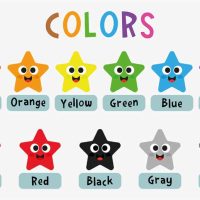
A simple list of colours and their names can help children build their vocabulary.
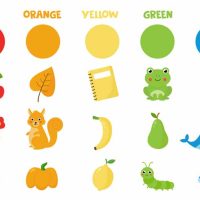
Red is the colour of apples, tomatoes, and many flowers. Blue is seen in the sky and water. Yellow reminds children of sunshine, bananas, and marigolds. Green appears in leaves, grass, and many vegetables. Orange appears in oranges, carrots, and marigolds. Pink is common in flowers, clothing, and toys. Purple appears in grapes, flowers, and some vegetables. Brown appears in tree trunks, soil, and wooden furniture. Black is seen in many everyday objects, including shoes and bags. White appears in clouds, milk, paper, and many flowers.
How Can Parents Help Children Understand Different Shades?
Once children recognise basic colours, parents can introduce lighter and darker shades. A child may understand light blue and dark blue by comparing two objects placed side by side. The same approach works with green, pink, purple, and other colours.
Instead of asking only, “What is this colour?”, try asking, “Which blue is lighter?” or “Can you find something darker?”
Why Are Pictures Helpful When Learning Colours?
Parents can create simple picture cards using household objects, magazine cut-outs, drawings, or photographs. A picture-based activity can become a game. Show your child several pictures and ask, “Can you find all the green things?”
How Can Indian Parents Use Festivals to Teach Colours?
India’s festivals provide especially rich opportunities for learning. During Diwali, children can notice the colours of diyas, rangoli designs, flowers, and decorations. During Holi, they can explore many bright shades while learning about colour mixing. During Navratri, children may notice the different colours associated with each day.
Food can also become a useful teaching tool. Ask children to identify the colour of mangoes, bananas, tomatoes, spinach, carrots, or grapes. This makes the names of colours easier to remember because children connect words with familiar experiences.
How Can Parents Make Colour Learning Interactive?
Make learning active rather than asking children to memorise a list. Put several toys on the floor and ask your child to group them by colour. During a walk, ask them to find three green things or two yellow objects.
Art activities are another simple option. Give children crayons or paints and ask them to create a picture using three named colours. As they work, ask questions such as, “Which colour did you choose?” or “What happens when you mix these colours?”
A playful prompt such as “Name this colour” can become part of a guessing game. Hold up an object and let your child answer before asking them to find something else with the same colour.
How Can Parents Teach Colour Words in English?
For children growing up in multilingual Indian homes, parents can introduce English colour vocabulary alongside their home language. For example, while pointing to a green leaf, a parent might say the word in the family’s home language and then repeat “green” in English. This creates connections between languages while strengthening vocabulary.
You can also play a colour and colour name matching game. Place written colour words beside coloured objects or pictures and ask children to match them.
What Does “Colour of Name” Mean for Young Learners?
Search phrases such as “colour of name” can reflect children’s curiosity about connecting words, objects, and visual information. Parents can use this curiosity to reinforce vocabulary. Ask children to identify an object’s colour and say its name clearly.
How Does Kangaroo Kids Approach Early Learning?
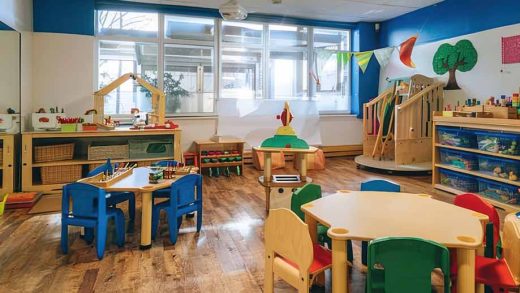
Kangaroo Kids encourages children to learn through exploration, creativity, communication, and hands-on experiences. Its preschool approach gives children opportunities to think, ask questions, experiment, create, and discover.
Colour activities can naturally support this approach. Sorting and creative play can also reinforce colour names. Children can sort objects, create artwork, observe nature, discuss what they notice, and experiment with mixing colours. The name of colours becomes more meaningful when children encounter colours in real situations. Instead of treating vocabulary as a memorisation exercise, parents can make it part of play and conversation.
Read More: Let’s Play, Let’s Learn: Explore 9 Exciting Colour Games for Preschoolers
FAQs
What Ages Does Kangaroo Kids Cater To?
Kangaroo Kids offers Playgroup for children aged 2 to 3, Nursery for ages 3 to 4, Junior KG for ages 4 to 5, and Senior KG for ages 5 to 6.
What Learning Approach Does Kangaroo Kids Follow?
Kangaroo Kids uses its iCan Learning System and Fluidic Learning Methodology to support child-centred learning through exploration, creativity, communication, and play.
Last Thoughts
Learning the name of colours is a small but important step in early language development. When children hear, see, compare, and use colour words regularly, they build vocabulary and learn to describe their world more confidently.
Parents can turn ordinary moments into opportunities to ask, “What colour is that?” or “Can you find another one?” With pictures, stories, art, nature walks, toys, food, and family conversations, children can learn colours naturally and enjoyably.
Colour names become easier to remember when learning feels connected to real life. These small conversations can become enjoyable parts of everyday family life.
For parents who want to encourage creativity, communication, and imaginative learning while helping children connect language with everyday experiences, exploring the admission process at Kangaroo Kids Preschool can offer valuable insights into how storytelling, art, exploration, and play-based learning create meaningful opportunities for young children to discover and express their ideas.