A friend recently told me about a conversation she had with her five-year-old son after preschool. She asked him what he had learned that day, expecting the usual answers about numbers, letters, or colours. Instead, he enthusiastically explained how he and his classmates had tried to build a bridge using blocks. The bridge kept collapsing, so they changed the design several times. Then they tested whether toy animals could cross it. After that, the teacher asked them why some bridges stayed standing while others fell apart.
My friend laughed and said, “That doesn’t sound like a lesson.”
In reality, it was one of the most powerful lessons a child could experience.
The children were observing, experimenting, adapting, solving problems, and thinking critically. They were learning how to learn. More importantly, they were developing a skill known as fluid reasoning, the ability to think flexibly, recognise patterns, solve new problems, and adapt to unfamiliar situations.
At Kangaroo Kids, this kind of learning is not treated as an occasional activity. It is woven into everyday experiences through what many educators describe as fluidic learning. Rather than viewing education as a series of isolated lessons, fluidic learning creates connected experiences that encourage curiosity, exploration, creativity, and flexible thinking.
For parents trying to prepare their children for an ever-changing future, understanding fluidic learning may be one of the most important educational concepts to explore.
Why Indian Parents Need to Think Beyond Traditional Learning
Many parents grew up in classrooms where learning followed a predictable structure.
The teacher taught.
Students listened.
Information was memorised.
Tests measured retention.
While knowledge remains important, today’s world increasingly rewards skills such as:
- Adaptability
- Creativity
- Collaboration
- Critical thinking
- Problem-solving
These abilities rely heavily on fluid reasoning rather than simple memorisation.
Children will eventually enter a world where many future jobs do not yet exist. The ability to adapt and think flexibly may become more valuable than the ability to recall facts.
This shift is one reason progressive schools increasingly embrace fluidic learning approaches.
What Is Fluidic Learning?
Fluidic learning is an educational approach that allows learning experiences to flow naturally across different areas of development and knowledge.
Rather than treating subjects as isolated categories, fluidic learning encourages children to:
- Explore ideas deeply
- Make connections
- Investigate questions
- Learn through experience
Learning becomes dynamic rather than rigid.
A conversation about rain might lead to:
- Science exploration
- Storytelling
- Art activities
- Vocabulary development
- Outdoor observation
Children experience learning as an interconnected process rather than a series of separate lessons.
Understanding Fluid Reasoning in Early Childhood
At the heart of fluidic learning is fluid reasoning.
Fluid reasoning refers to a child’s ability to:
- Solve unfamiliar problems
- Recognise patterns
- Make connections
- Adapt to new situations
- Think logically
Unlike memorised knowledge, fluid reasoning focuses on how children think rather than what they know.
A child demonstrating strong fluid reasoning may not immediately know an answer but can work toward a solution through observation and experimentation.
These skills become increasingly valuable throughout life.
Why Fluid Reasoning Matters More Than Ever
The modern world changes rapidly.
Technology evolves.
Industries transform.
New challenges emerge constantly.
Children need the ability to:
- Adapt
- Learn independently
- Solve problems creatively
This is why educators place increasing emphasis on fluid reasoning.
The goal is not simply to prepare children for school but to prepare them for life.
Fluid reasoning helps children become flexible thinkers who can navigate uncertainty with confidence.
How Fluidic Learning Looks in a Preschool Classroom
Parents often imagine learning as structured lessons delivered by teachers.
Fluidic learning looks different.
For example:
A discussion about insects may evolve into:
- Nature observation
- Drawing activities
- Story creation
- Counting exercises
- Scientific investigation
Children move naturally between experiences while remaining engaged in a common theme.
This flexibility encourages deeper understanding and stronger connections between ideas.
Why Curiosity Drives Learning
Children are naturally curious.
They ask questions such as:
- Why do birds fly?
- How do plants grow?
- Where does rain come from?
Traditional teaching may provide immediate answers.
Fluidic learning often begins with the questions themselves.
Teachers encourage children to:
- Observe
- Investigate
- Explore possibilities
This process strengthens fluid reasoning because children actively participate in constructing understanding.
Child-Centered Learning and Fluidic Education
One of the defining characteristics of fluidic learning is child-centred learning.
Rather than designing every experience around predetermined outcomes, educators pay attention to:
- Children’s interests
- Questions
- Observations
- Curiosities
When children become active participants in learning, engagement increases significantly.
This approach respects children’s natural desire to explore and discover.
How Child-Led Learning Supports Flexible Thinking
Fluidic learning often incorporates child-led learning experiences.
This does not mean children decide everything.
Instead, educators observe children’s interests and use them as starting points for meaningful learning opportunities.
For example:
- A fascination with insects may lead to scientific investigations.
- Interest in vehicles may inspire engineering activities.
These experiences encourage ownership and motivation while strengthening fluid reasoning.
Why Problem-Solving Plays a Central Role
Children encounter countless problems every day.
Examples include:
- Building structures
- Sharing materials
- Completing puzzles
- Navigating social situations
Fluidic learning treats these moments as valuable opportunities.
Rather than providing immediate solutions, teachers encourage children to:
- Think critically
- Test ideas
- Reflect on outcomes
This process helps develop strong fluid reasoning skills.
How Storytelling Builds Fluid Reasoning
Stories offer more than entertainment.
Through storytelling, children learn to:
- Predict outcomes
- Understand cause and effect
- Recognise patterns
- Explore perspectives
These experiences contribute directly to fluid reasoning.
Stories help children organise information and think beyond immediate experiences.
At Kangaroo Kids, storytelling often becomes a gateway to broader exploration and learning.
Why Play Is Essential
Play remains one of the most powerful learning tools available to young children.
During play, children:
- Experiment
- Negotiate
- Solve problems
- Create possibilities
Play encourages flexible thinking because there are often multiple ways to achieve a goal.
This naturally supports the development of fluid reasoning.
The ability to think creatively and adaptively often emerges through play-based experiences.
Read More: Unexpected Reason Behind Infant Reflux and Tips to Aid Baby’s Sleep
The Importance of a Flexible Learning Environment
Fluidic learning thrives within a flexible learning environment.
Such environments allow children to:
- Explore freely
- Move between activities
- Access resources independently
- Collaborate with peers
The physical space supports curiosity and discovery.
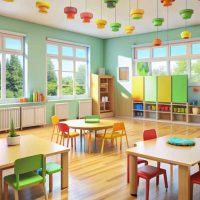
At Kangaroo Kids, classrooms are designed to encourage exploration rather than passive participation.
The environment itself becomes an important part of the learning experience.
How Creativity and Inquiry Work Together
Fluidic learning encourages children to ask questions and explore possibilities.
Creativity and inquiry become interconnected.
Children may:
- Design solutions
- Invent stories
- Test hypotheses
- Build structures
These experiences strengthen both imagination and logical thinking.
The combination helps children develop a versatile approach to learning.
Why Collaboration Enhances Learning
Many fluidic learning experiences involve collaboration.
Children work together to:
- Solve problems
- Share ideas
- Complete projects
- Explore concepts
Collaboration exposes children to different perspectives.
This often challenges them to reconsider assumptions and adapt their thinking.
Such experiences contribute significantly to the development of fluid reasoning.
How Kangaroo Kids Integrates Fluidic Learning
The Kangaroo Kids philosophy recognises that children learn best when learning feels meaningful, connected, and engaging.
Rather than focusing solely on isolated academic outcomes, educators create experiences that:
- Encourage exploration
- Foster curiosity
- Promote collaboration
- Support problem-solving
- Build confidence
Children are encouraged to ask questions, investigate ideas, and discover connections between different areas of learning.
This integrated approach helps nurture adaptable and capable learners.
Why Fluidic Learning Supports Future Readiness
Future success will depend on more than academic achievement.
Children will need:
- Adaptability
- Creativity
- Resilience
- Communication
- Critical thinking
Fluidic learning supports these abilities by helping children become active participants in their own learning journeys.
The emphasis on fluid reasoning ensures that children develop the flexibility needed to navigate an unpredictable future.
What Parents Can Do at Home
Parents can support fluidic learning by:
- Encouraging questions
- Exploring answers together
- Allowing open-ended play
- Reading widely
- Valuing curiosity
The goal is not always to provide answers immediately.
Sometimes the best response is:
“What do you think?”
This simple question encourages children to explore possibilities and develop independent thinking.
Last Thoughts
The future belongs to individuals who can adapt, think creatively, solve problems, and continue learning throughout their lives. These abilities are rooted not only in knowledge but also in the capacity for flexible thinking.
Fluidic learning helps children build these capabilities by connecting experiences, encouraging exploration, and fostering curiosity. Through meaningful activities that integrate play, inquiry, collaboration, and discovery, children strengthen fluid reasoning while developing confidence and independence.
At Kangaroo Kids, fluidic learning shapes everyday experiences by recognising that children learn best when learning feels connected, purposeful, and engaging. Rather than simply preparing children for the next stage of education, the goal is to help them become curious, adaptable learners who are ready to thrive in a rapidly changing world.
For parents looking for a preschool that nurtures curiosity, critical thinking, creativity, and flexible problem-solving, exploring the Kangaroo Kids approach can offer valuable insight into how inquiry-driven experiences, child-led exploration, and holistic learning help children build the confidence and capabilities needed for lifelong success.