In classrooms across India, a quiet shift is underway. Educators and parents are beginning to question an age-old assumption: that learning happens best when children sit still.
Modern neuroscience suggests otherwise. Movement-based learning is emerging as a powerful way to improve memory, attention span, and academic performance. By engaging the body, we activate the brain. In a country where academic pressure starts early, understanding the connection between movement and brainpower is essential.
Why the Brain Needs the Body
The human brain grows in constant interaction with the body. Every jump or coordinated movement sends signals through neural networks, strengthening connections involved in focus and memory. Physical movement increases blood flow and oxygen to the brain, sharpening attention spans.
Movement-Based Learning: What It Really Means
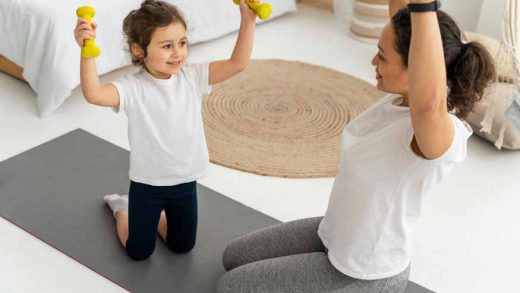
Movement-based learning is an educational approach where physical activity is intentionally integrated into academic instruction. It goes beyond sports to include actions like acting out stories or using hand movements to solve math problems. This approach aligns closely with active learning vs passive learning.
How Movement Improves Memory
Encoding Information Through Action
Memory formation improves when learning is multisensory. When children move while learning, information is encoded physically and emotionally. For example:
- Acting out a story helps children remember the plot
- Using body movements to learn multiplication tables improves recall
This is one of the most essential kinesthetic learning benefits.
Long-Term Retention Over Short-Term Cramming
Movement-based learning supports long-term memory by linking concepts to physical experiences. This distinction is important in India’s exam-centric system, helping children understand why something works.
Movement and Attention Span: A Natural Boost
Why Sitting Still Works Against the Brain
Young children are not biologically designed to sit still for long periods. Regular physical movement helps regulate dopamine levels, directly impacting physical activity and concentration. Short movement breaks can reset attention and improve focus.
Movement as a Tool for Self-Regulation
Movement also supports emotional regulation, helping children manage stress and impulsivity. This is especially relevant in Indian classrooms with large class sizes.
Academic Benefits Across Subjects
Language and Literacy
Movement enhances language learning by linking words with actions. Acting out verbs or moving rhythmically with rhymes improves vocabulary. These are well-documented kinesthetic learning benefits.
Mathematics and Logical Thinking
Math concepts like counting and measurement become clearer when children move. Jumping in number sequences or forming shapes with their bodies makes abstract ideas tangible.
Active Learning vs Passive Learning: A Clear Divide
Aspect | Passive Learning | Active / Movement-Based Learning |
Student role | Listener | Participant |
Brain engagement | Limited | High |
Memory retention | Short-term | Long-term |
Attention span | Declines quickly | Sustained |
Understanding | Surface-level | Conceptual |
This comparison makes one thing clear: active learning vs passive learning is a neurological advantage.
The Indian Context: Why This Matters More Than Ever
In India, children face long school hours and limited playtimes. Integrating movement-based learning offers a practical solution. The National Education Policy (NEP) 2020 reinforces this by emphasising experiential and play-based learning.
Simple Ways to Integrate Movement Into Learning
Movement-based learning does not require expensive equipment. Simple strategies include:
- Acting out lessons
- Walking discussions
- Stretch breaks between subjects
These techniques improve physical activity and concentration while enhancing academic outcomes.
Preparing Learners for the Future
Movement-based learning supports the skills children will need: attention control, memory strength, and flexible thinking. By embracing movement as a core part of education, India can nurture learners who are cognitively sharp.
At Kangaroo Kids, we ensure that learning moves so minds can grow.