The preschool years, typically between ages three and six, mark one of the most crucial stages in a child’s development. Neuroscience for kids research highlights that more than 90% of a child’s brain develops by the age of five.
During this period, children are highly receptive to experiences, interactions, and learning environments. Understanding what brain science reveals about the normal growth and development of preschoolers is essential for parents, teachers, and policymakers in India.
The Neuroscience of Learning in Preschoolers
Brain Plasticity in the Early Years
Preschoolers’ brains are extraordinarily plastic. This means they can form and reorganise neural connections rapidly in response to new experiences.
According to the Center on the Developing Child, Harvard University, “The brain is more influenced by experience in a child’s earliest years. The brain’s ability to adapt — known as brain plasticity — declines as we age”. That is why activities such as storytelling, rhymes, or simple puzzles create a strong foundation for preschool cognitive development, boosting memory and attention span.
Critical Windows of Development
Neuroscientists have identified sensitive periods when the brain is exceptionally responsive to specific inputs. For example, exposure to language-rich environments during preschool years strengthens vocabulary and communication skills.
In a country like India, within our tier 1 cities, children from many different states, cultures, and languages come together in a preschool “melting pot”. With so many languages being spoken, children are exposed to a plethora of linguistic skills at an early age.
The Role of Play in Brain Development
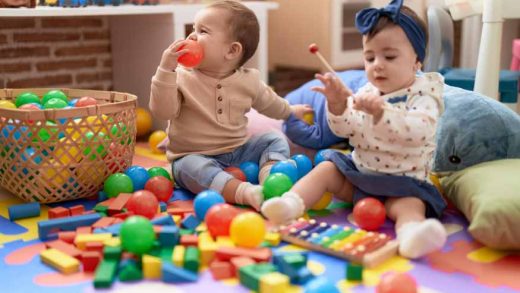
Play is not just recreation; it is a core element of learning. Neuroscience activities for kids, such as role-playing, building with blocks, or playing outdoor games, stimulate areas of the brain responsible for executive function, decision-making, and social interaction.
Play-based learning contributes to preschool cognitive development through activities such as memory games, storytelling sessions, and problem-solving tasks. These encourage higher-order thinking skills that are essential when children transition into formal schooling.
Neuroscience Activities for Kids in the Classroom
It is essential to note that over the past few years, teachers in India have been incorporating neuroscience-based activities that align with research-backed methods.
Some examples include:
- Music and rhythm exercises that strengthen memory and auditory processing.
- Movement-based learning, such as dance or yoga that enhances coordination and focus.
- Storytelling with visuals that build comprehension and imagination.
- Mindfulness exercises that help preschoolers manage stress and improve attention.
The Importance of Early Childhood Education in India
According to the Ministry of Statistics and Programme Implementation (MoSPI), the 2011 Census estimated the population of children below 6 years at 158.8 million. The National Education Policy (NEP) 2020 emphasises early childhood education as foundational for lifelong learning.
Neuroscience validates this policy by demonstrating that strong early experiences can determine future academic performance and socio-emotional stability.
Parents and Educators: A Shared Role
Neuroscience reveals that the home and school environments work hand-in-hand.
- Parents who engage in daily conversations and read books significantly accelerate their child’s development.
- Educators provide structured preschool activities that stimulate cognitive development.
- Extended Family: In India, where joint family systems are prevalent, involving grandparents can further enrich a child’s brain development.
Practical Takeaways for Parents and Teachers
To transform abstract neuroscience findings into real-world learning practices:
- Encourage curiosity: Let children ask questions and explore freely.
- Prioritise play: Use play as a structured tool for problem-solving and collaboration.
- Use stories and songs: They strengthen both language and memory pathways.
- Incorporate mindfulness: Short breathing or relaxation practices can build focus.
- Balance digital exposure: Excessive screen time can hinder attention and creativity.
Bridging Neuroscience and Education at Kangaroo Kids
Kangaroo Kids, a pioneer in preschool education in India, integrates brain science into its curriculum.
According to their philosophy, the Kangaroo Kids pedagogy emphasises personalised learning, experiential activities, and a strong focus on creativity. They design preschool cognitive developmental activities and neuroscience activities for kids that make learning engaging and scientifically aligned with how the brain develops.
For parents exploring preschools, Kangaroo Kids demonstrates how early childhood education informed by neuroscience can set children on the path to confident and joyful learning.
Ready to give your child a brain-based head start? Contact us to visit a centre near you.