I still remember when my daughter was three; she would giggle every time we read The Cat in the Hat. She wasn’t laughing at the story alone — she was enjoying the rhythm of the rhyming words. That’s the magic of rhyme. Children latch onto it instinctively. It makes words easier to remember, sounds easier to recognise, and learning is far more fun.
This blog is all about that magic: how rhyming words for kids can become a simple yet powerful tool to build vocabulary and confidence in language.
Why Do Children Love Rhyme So Much?
Children are wired to notice patterns. Just as they love repeating a favourite cartoon or song, they also love words that “sound the same.” Rhyme creates a beat, almost like music, and their brains quickly tune in.
From a learning perspective, rhymes help with:
- Phonemic awareness — recognising that words are made up of smaller sounds.
- Memory — rhymes stick better than random word lists.
- Prediction skills — when a child hears “star,” they can guess that “car” might follow.
This is why almost every nursery rhyme, from Humpty Dumpty to Jack and Jill, has survived generations. They are more than songs — they are early reading lessons hidden inside playful verses.
Simple Everyday Rhymes You Can Try
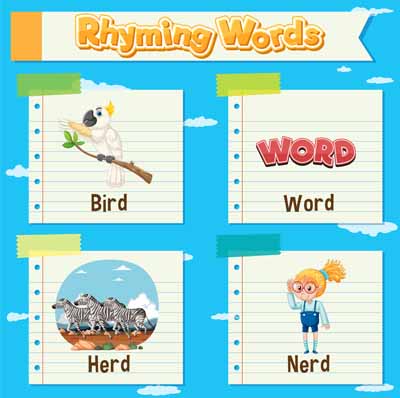
You don’t need a classroom to start. Rhyme can be woven into daily life in the simplest ways.
- While cooking: “Pan, can, fan.”
- On the road: “Car, star, bar.”
- At bedtime: “Light, night, bright.”
Even silly ones work. My nephew once rhymed “dog” with “frog” and “mog” (which doesn’t even exist). We laughed, but the important part was that he was listening to sounds and experimenting with words.
Popular Sets of Rhyming Words in English for Kids
Here are a few families of words that are easy to introduce:
Short vowel words
- cat, bat, hat, mat
- pen, hen, ten, men
Long vowel words
- kite, light, night, sight
- blue, clue, glue, true
Everyday things
- ball, tall, hall, call
- chair, hair, fair, pair
Nature words
- sun, run, fun, bun
- rain, train, chain, pain
When teaching, keep the groups small. Children remember better when they practice three or four rhyming pairs over a few days instead of racing through big lists.
Beyond Vocabulary: What Rhyming Really Builds
It’s easy to think rhyme is just wordplay. But here’s what’s really happening in your child’s mind:
- Sharper listening skills — they learn to focus on how words sound.
- Confidence in speaking — rhymes give rhythm to language, making kids more expressive.
- Creative thinking — nonsense rhymes show imagination at work.
- Foundation for reading — once kids know word families, decoding text becomes smoother.
One teacher once told me, “Children who enjoy rhymes usually jump into reading with more excitement.” I’ve seen this in my own home too — rhyme gives kids a head start.
How Parents Can Make Rhyming Fun
You don’t need worksheets every day. Here are some playful ways to weave rhyme into your child’s routine:
1. Bedtime Stories with Rhyme
Choose books with rhyming text. Pause occasionally and let your child fill in the missing word. Example: “The sun is bright, we say good…” (night).
2. Songs and Chants
Music multiplies memory. Sing “Row, Row, Row Your Boat” or “Baa Baa Black Sheep” together. Clap along with the beat.
3. Rhyme Hunt
Pick a word like “box” and challenge your child to spot things around the house that rhyme: “socks,” “locks,” “rocks.”
4. Worksheets with Pictures
Yes, structured practice helps too. Use rhyming words for kids’ worksheets where children match a picture of a cat with a picture of a hat or circle words that rhyme.
5. Play with Mistakes
Say a rhyme wrong on purpose. “Twinkle, twinkle, little car…” Your child will burst out laughing and correct you. The mistake is the lesson.
Teachers’ Tricks for Classrooms
In schools, rhyme is often taught through group activities. Here’s what works well:
- Circle games — each child adds a rhyming word to a chain.
- Rhyme-and-draw — children draw rhyming pairs like “dog” and “frog.”
- Movement activities — kids jump or clap every time they hear rhymes in a story.
Most preschools also send home rhyming words for kids’ worksheets so parents can reinforce the learning. The key is repetition across settings: home, school, and play.
Mistakes to Avoid
Many parents, with the best intentions, end up making rhyme a chore. Here are a few things to keep in mind:
- Don’t rush. A few rhymes learnt well are better than a long list rattled off once.
- Don’t stick only to “correct” rhymes. Let kids invent funny ones. It builds creativity.
- Don’t expect instant results. Repetition over days and weeks is what works.
Fun Rhyme Games for Older Children
Rhymes don’t have to stop at preschool. As kids grow, you can challenge them with more advanced activities:
- Riddle rhymes: “I rhyme with fog, I chase cats, who am I?” (dog).
- Finish the poem: Start a line and let them end it. “I saw a mouse inside the …”
- Rap challenges: Put on a beat and let them try making up short rhymes.
This keeps rhyme alive beyond nursery rhymes, stretching vocabulary and creativity at the same time.
Why Rhyme Still Matters in a Digital Age
We live in a time when children are surrounded by screens. Apps, cartoons, and online videos are everywhere. While they can be useful, rhyme offers something screens cannot — pure imagination powered by sound.
It doesn’t need gadgets, only words. And those words create bonding moments between parent and child. A silly rhyme in the car, a bedtime chant, a classroom game — these are small steps that build a lifelong love for language.
Wrapping Up
To put it simply, rhyming words for kids are more than entertainment. They are stepping stones to reading, writing, and speaking with confidence. If you introduce a few sets of rhyming words in English for kids, play rhyme-based games, and use engaging rhyming words for kids’ worksheets, you’ll notice progress in both vocabulary and imagination.
So, the next time your child shouts out “bat” when you say “cat,” know that it’s more than play. It’s learning at its happiest.
At Kangaroo Kids International Preschool, rhyme is woven into songs, stories, and everyday classroom fun. We believe children learn best when they enjoy the process, and rhymes make that possible. If you want your child to experience joyful, play-based learning with a strong language foundation, Kangaroo Kids is the place to start.